How to Calculate Gross Profit and Net Profit (With Margin Formulas)
Gross profit vs net profit: calculate both and their margins step by step, understand COGS, and see why a healthy gross margin can still mean a weak net profit.
Quick answer
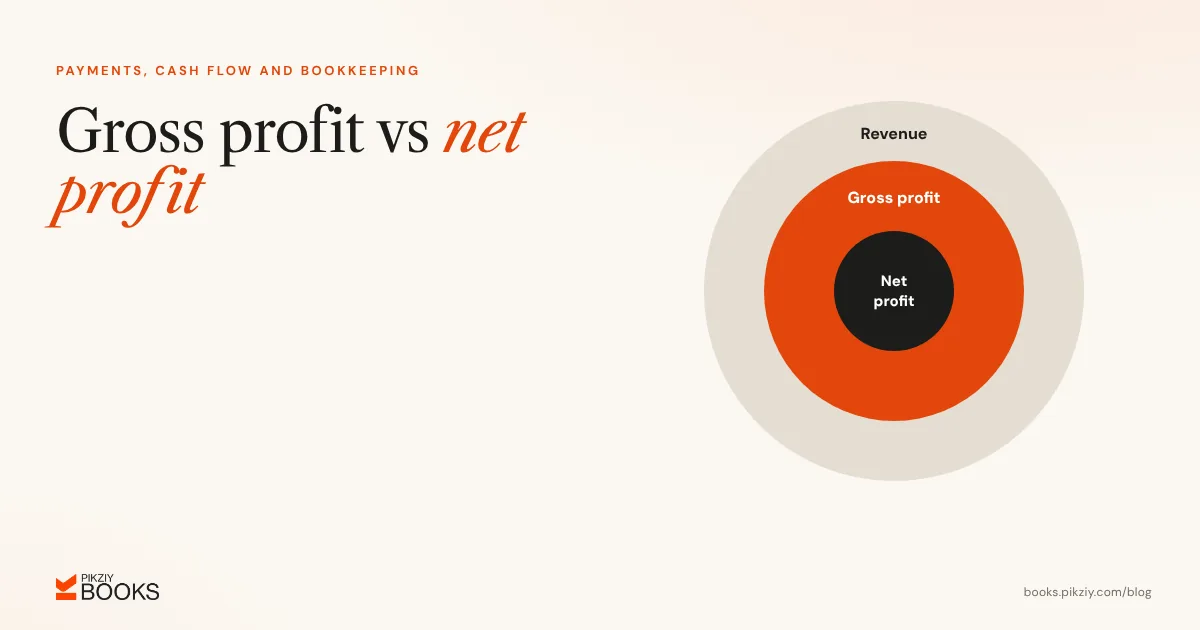
Gross profit vs net profit comes down to which costs you take off. Gross profit = revenue − cost of goods sold (COGS). Net profit = gross profit − operating expenses − depreciation − interest − tax. Gross margin % = gross profit ÷ revenue × 100. Net margin % = net profit ÷ revenue × 100.
Cost of goods sold
COGS is the direct cost of what you sold:
- For a trader: opening stock + purchases − closing stock.
- For a manufacturer: materials, direct labour and production costs.
- For a service business: direct costs such as freelancers or materials used on projects.
Worked example: a retailer
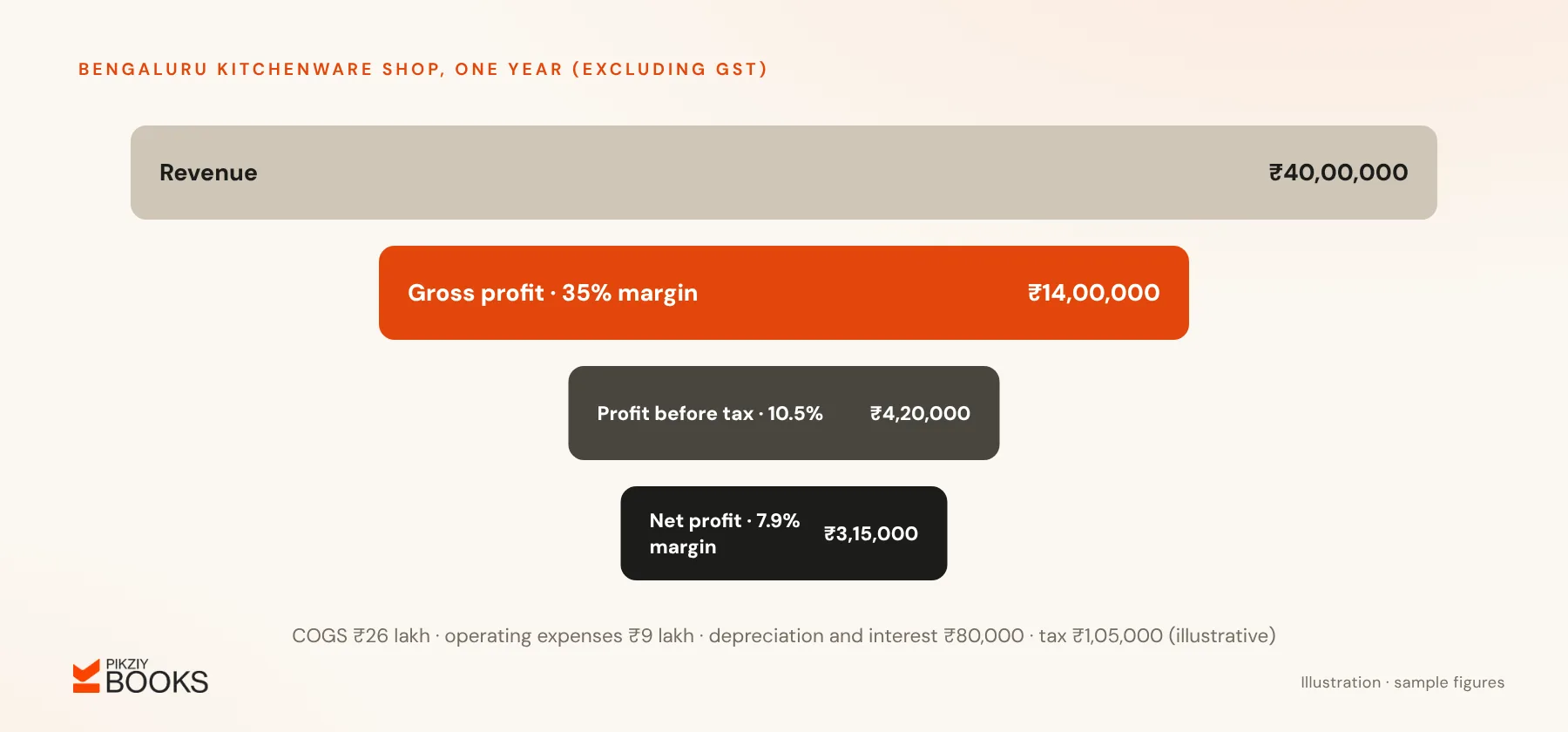
A Bengaluru kitchenware shop, for the year, excluding GST:
| Amount | |
|---|---|
| Revenue | ₹40,00,000 |
| Opening stock | ₹6,00,000 |
| Purchases | ₹27,00,000 |
| Closing stock | ₹7,00,000 |
| COGS (6 + 27 − 7 lakh) | ₹26,00,000 |
| Gross profit (35% margin) | ₹14,00,000 |
| Operating expenses: rent ₹2,40,000, salaries ₹4,20,000, electricity ₹60,000, marketing ₹1,20,000, other ₹60,000 | − ₹9,00,000 |
| Depreciation | − ₹50,000 |
| Interest | − ₹30,000 |
| Profit before tax (10.5%) | ₹4,20,000 |
| Tax (illustrative) | − ₹1,05,000 |
| Net profit (7.9% margin) | ₹3,15,000 |
Why both matter
- Gross margin shows pricing power and control of direct costs.
- Net margin shows whether the whole business, including overheads, is efficient.
A strong gross margin with a weak net margin points to high overheads. For a service business, the same idea applies project by project; see how to track project profitability.
Margin vs markup
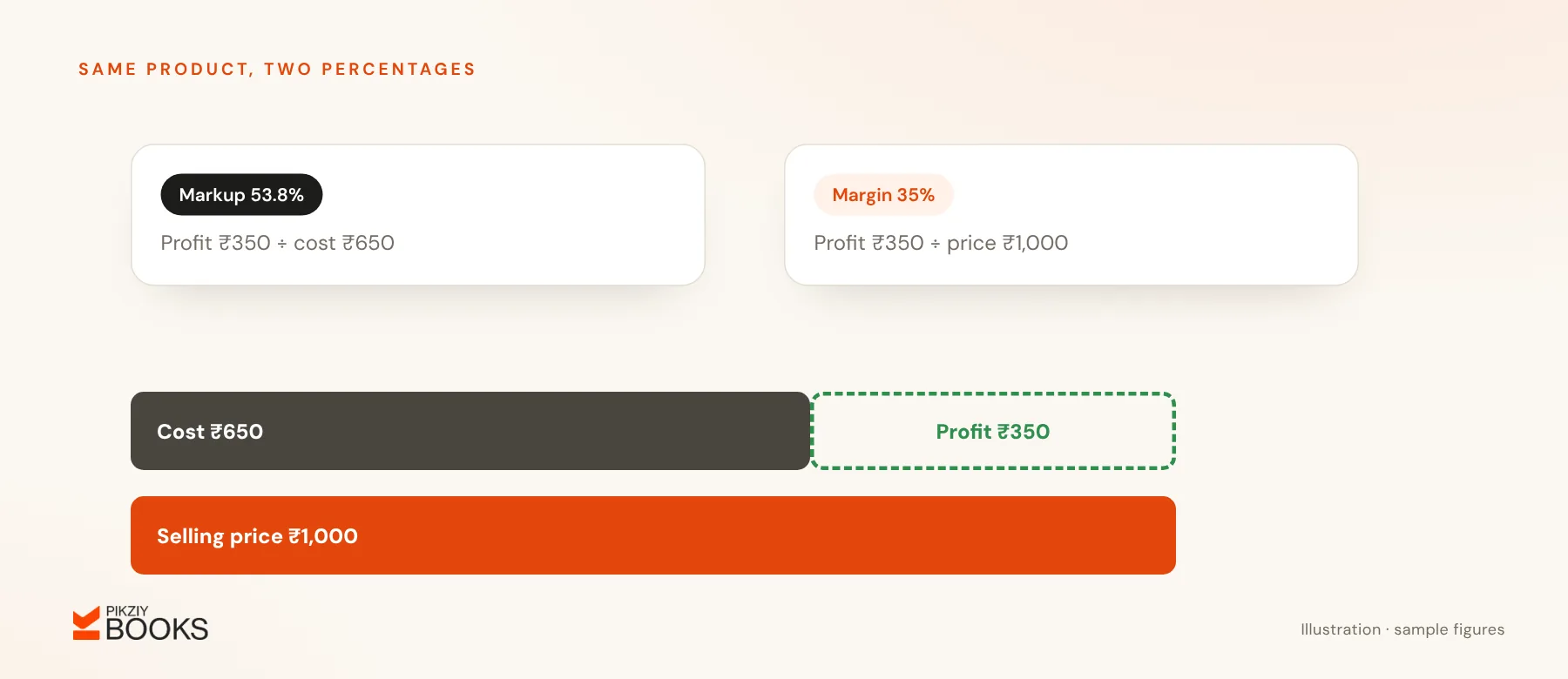
Markup is profit as a percentage of cost; margin is profit as a percentage of the selling price. An item that costs ₹650 and sells for ₹1,000 has a markup of 53.8% but a margin of 35%. Confusing the two leads to underpricing: a 35% markup on ₹650 gives a price of only ₹877.50.
Common mistakes
- Including GST in revenue.
- Ignoring changes in stock when calculating COGS.
- Comparing margins across very different kinds of business.
Frequently asked questions
Can gross profit be negative?
Is net profit the same as cash in the bank?
Where do these numbers come from?
What is a good net margin?
Next step
Work out last quarter's gross and net margins, and check whether you price using markup or margin. PikZiy Books calculates both margins from your invoices, purchases and expenses, excluding GST.