GST for Freelancers in India: A Practical Guide
GST for freelancers in India: when to register, how export of services and LUT work, what rate to charge, how to invoice and which records to keep.

Quick answer
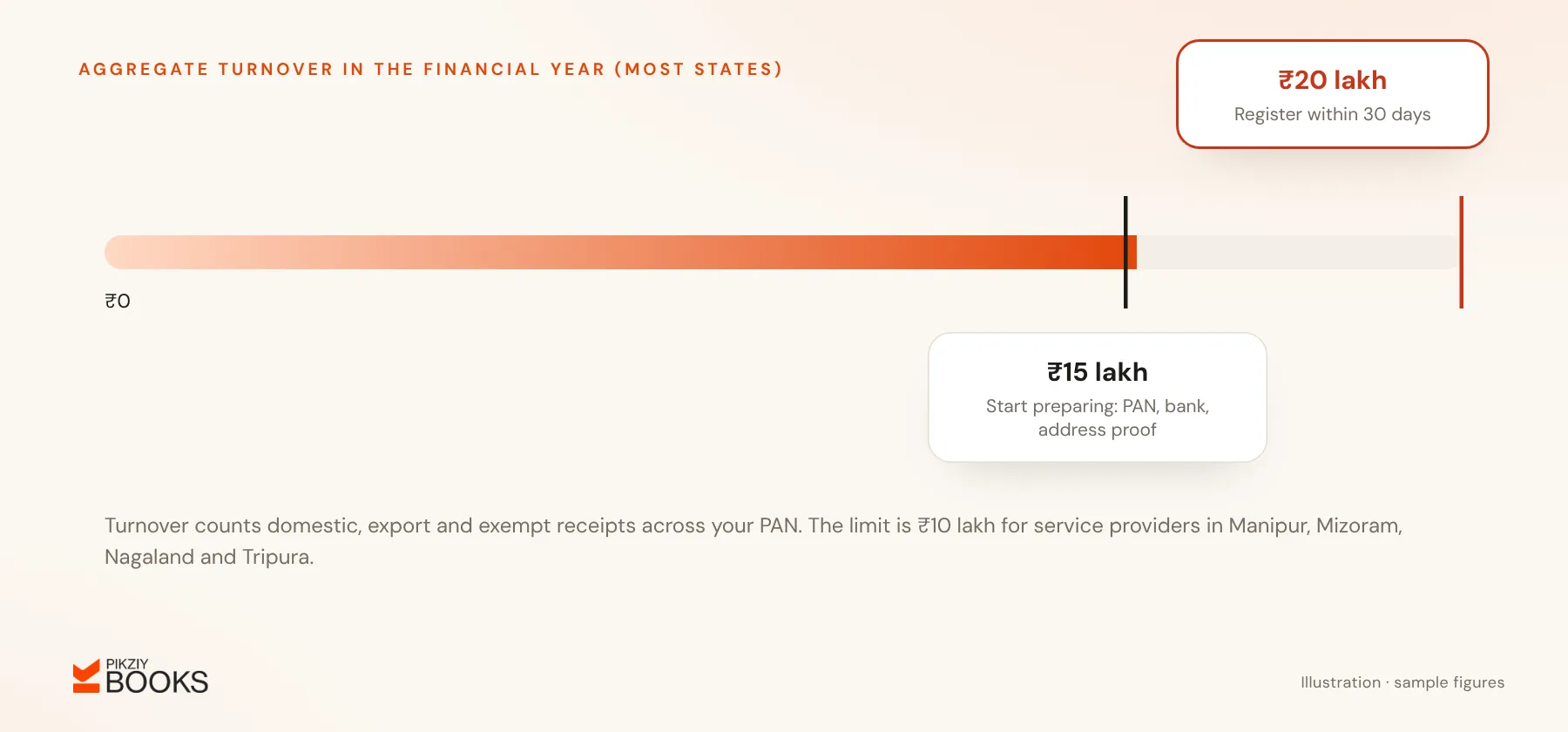
GST for freelancers comes down to a few rules. Freelancers providing services must register for GST once their aggregate turnover crosses ₹20 lakh in a financial year (₹10 lakh in Manipur, Mizoram, Nagaland and Tripura). Most freelance services are taxed at 18%. Services to foreign clients that meet the export conditions are zero-rated, and are usually invoiced under a Letter of Undertaking (LUT) with no GST charged. Below the threshold, registration is optional.
Do you need to register?
- Turnover above ₹20 lakh: registration is mandatory. Apply within 30 days of crossing the limit.
- Below the threshold: you can stay unregistered, or register voluntarily if your clients want GST invoices.
- Special cases: some situations need registration whatever your turnover, such as some kinds of supply through e-commerce operators. Check with your CA if you sell through platforms or also sell goods.
Aggregate turnover includes all your domestic sales, exports and exempt supplies across your PAN, for the whole financial year. Export receipts count towards the ₹20 lakh even though no GST is charged on them.
Invoicing domestic clients
Once registered, issue tax invoices with GST at the applicable rate, usually 18%:
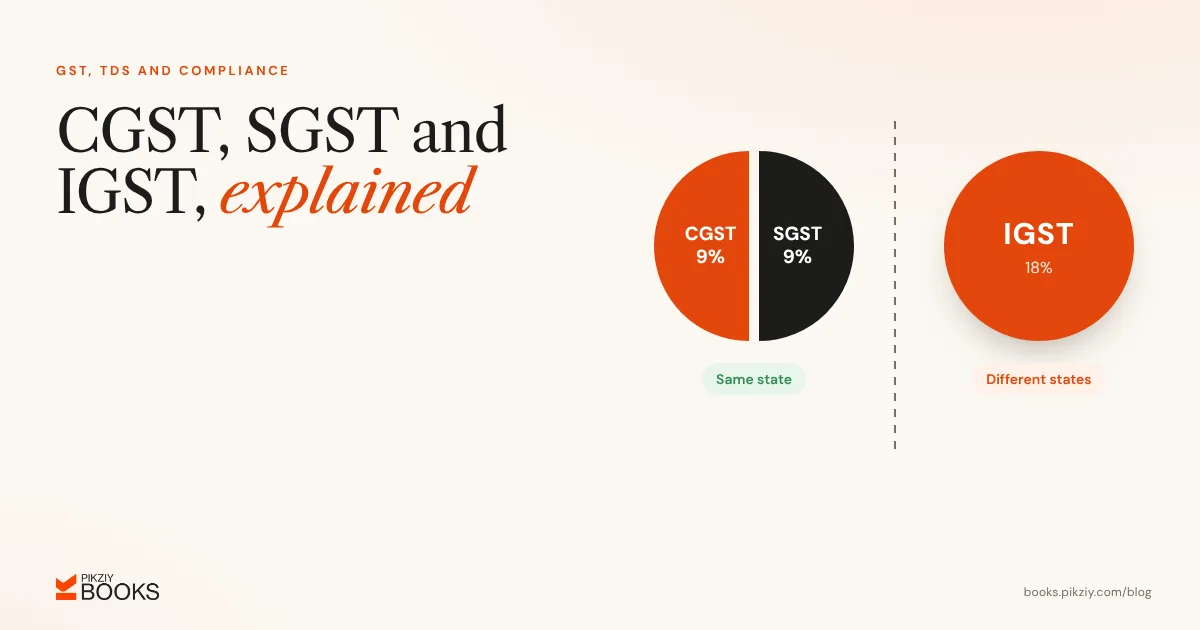
- Client in your state: CGST 9% + SGST 9%.
- Client in another state: IGST 18%.
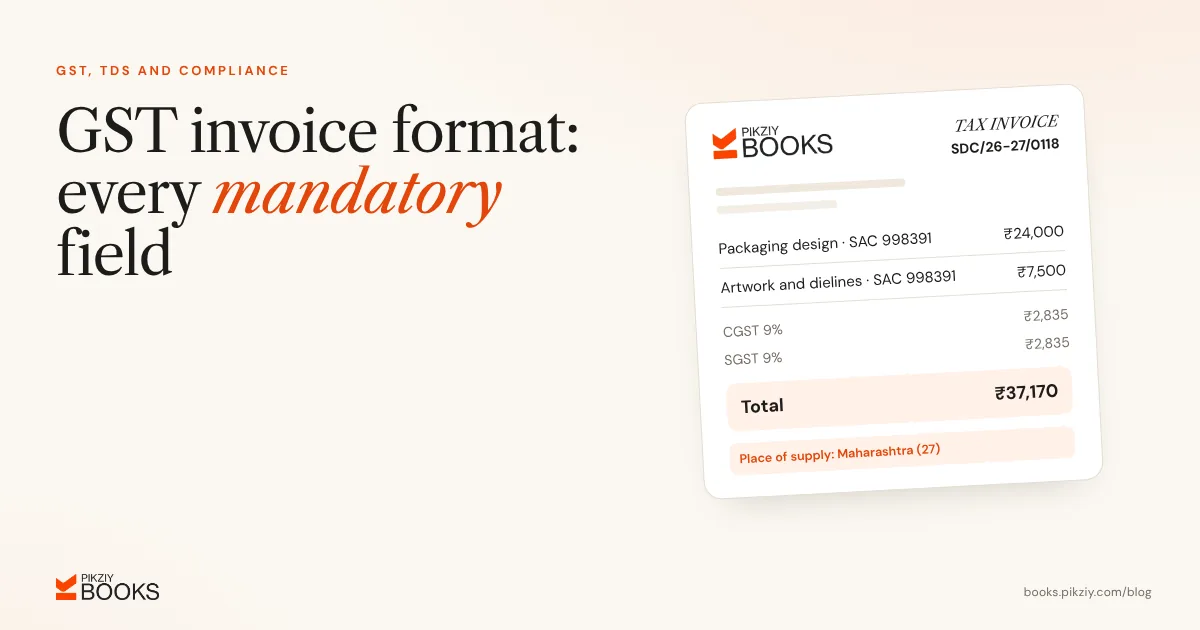
Example: a Lucknow illustrator bills a Noida publisher (both in Uttar Pradesh) ₹50,000. CGST ₹4,500 + SGST ₹4,500. Total ₹59,000. The GST invoice format lists everything the invoice must show.
If you are not registered, you cannot charge GST. Use the format in invoice without GST registration instead.
Foreign clients: export of services
A service counts as an export when, broadly, all of these are true:
- You are located in India.
- Your client is located outside India.
- The place of supply is outside India.
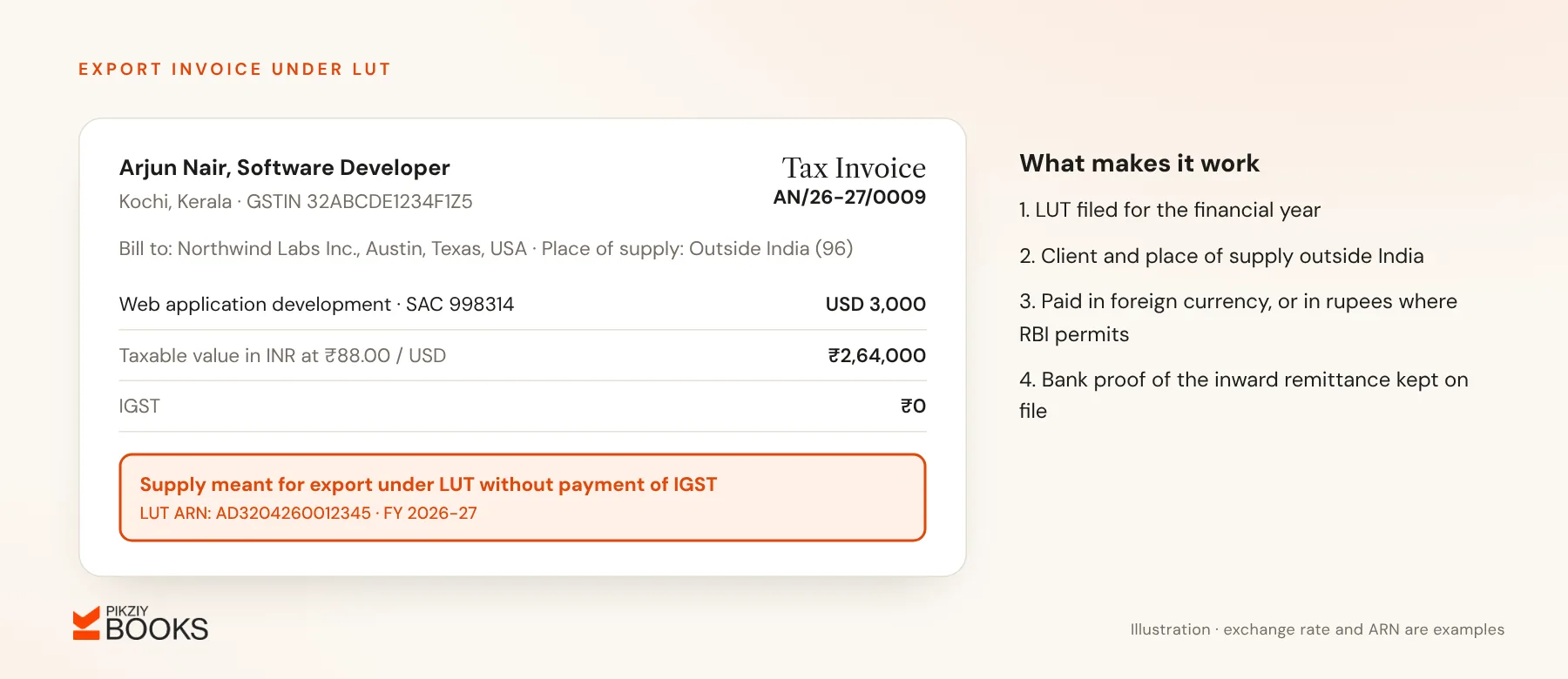
- You are paid in convertible foreign currency, or in Indian rupees where the RBI permits.
- You and the client are not just two establishments of the same person.
Most freelancers export without paying GST by filing an LUT:
- File an LUT online on the GST portal (Form GST RFD-11) at the start of each financial year.
- Invoice without GST, with the note “Supply meant for export under LUT without payment of IGST”.
- Report the export in GSTR-1 and GSTR-3B.
- Keep proof of the foreign currency received, such as the bank's advice or FIRA.
Example: a Kochi developer invoices a US client USD 3,000. At an illustrative exchange rate of ₹88 per dollar, the taxable value is ₹2,64,000, with zero GST under the LUT.
Returns and compliance once registered
- GSTR-1 for sales and GSTR-3B for tax payment, monthly, or quarterly under QRMP. See GSTR-1 and GSTR-3B.
- An annual return, where it applies to your turnover.
- Input tax credit on business purchases, such as laptops and software bought from Indian suppliers with GST invoices. See input tax credit.
Should you register voluntarily?
| Register early if | Stay unregistered for now if |
|---|---|
| Most clients are GST-registered companies that prefer GST invoices | Most clients are individuals or foreign businesses |
| You have large business purchases with GST that you want to claim back | You want to avoid monthly filings while turnover is small |
| You are close to ₹20 lakh and growing | Your turnover is well below the limit |
Records to keep
- All invoices, credit notes and receipts.
- Bank statements showing foreign remittances, and the related FIRAs.
- Purchase invoices for ITC.
- Your LUT acknowledgement for each year.
Common mistakes
- Forgetting to renew the LUT each April, then exporting without it.
- Charging GST to foreign clients on services that qualify as exports.
- Noticing the threshold only after crossing it by a wide margin.
- Leaving export receipts out of the turnover count.
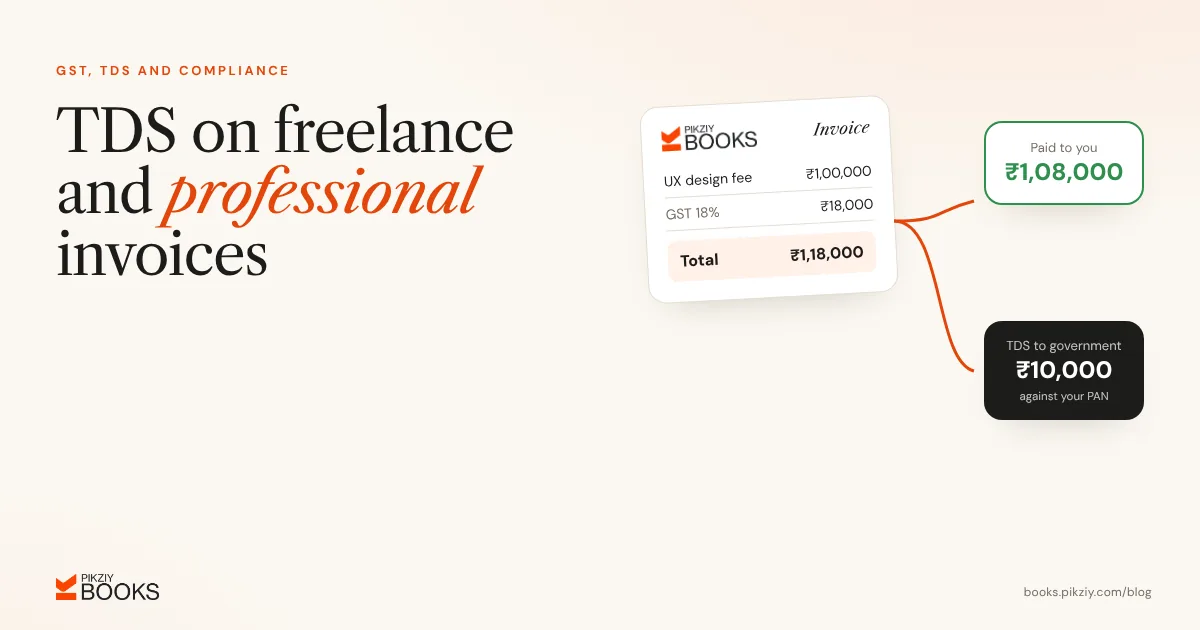
Many freelancers also have TDS deducted by Indian clients; see TDS on freelance invoices.
Frequently asked questions
Is GST charged on payments from Upwork or Fiverr clients?
Can I cancel my GST registration if my income falls?
Is 18% the only GST rate for freelancers?
Do I need GST registration only for foreign clients?
Next step
Add up your receipts for this financial year, including exports, and see how close you are to ₹20 lakh. PikZiy Books shows your running turnover and creates both GST invoices for Indian clients and export invoices with the LUT declaration.