How Much Should Freelancers Charge in India? A Step-by-Step Pricing Method
How much should freelancers charge? Work out your rate from an income target, real billable hours, expenses and tax, with a step-by-step Indian example.
Quick answer
How much should freelancers charge? Start from the yearly income you need, add your business expenses and a buffer for tax and slow months, then divide by the hours you can realistically bill, not the hours you work. For most freelancers that is 1,000 to 1,300 billable hours a year. The result is your minimum hourly rate. Then check it against your market and the value you deliver.
Step 1: set your income target
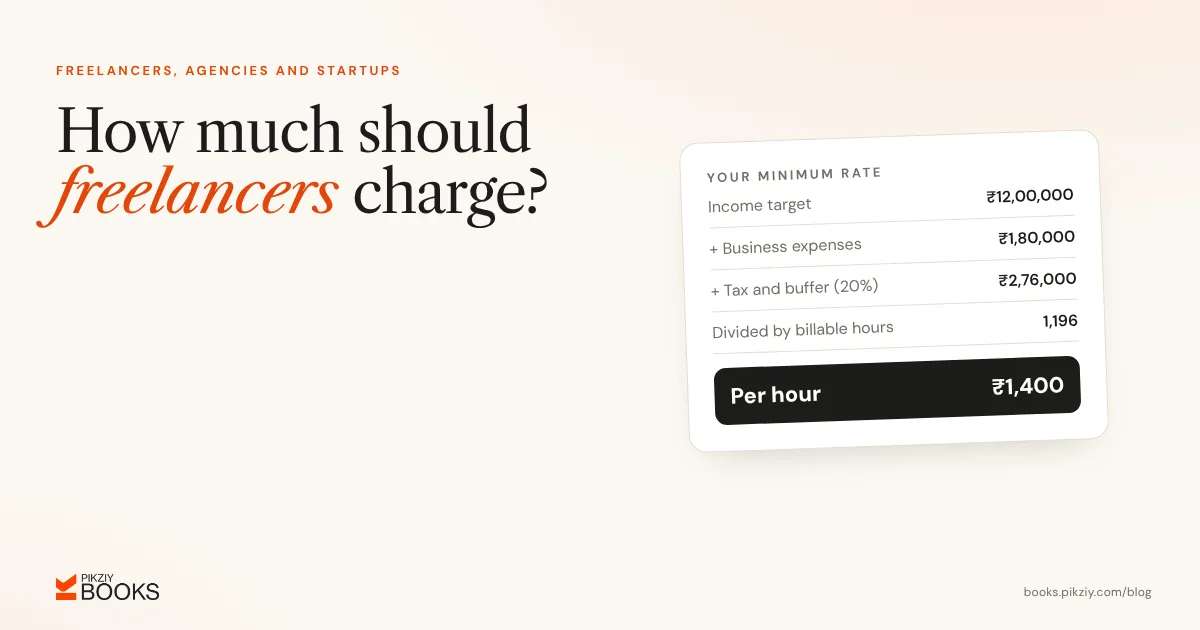
Decide the yearly personal income you need before tax, including savings and an emergency fund. Example: ₹12,00,000.
Step 2: add business expenses
List your yearly costs: equipment replacement, software, internet, coworking, courses, accounting fees and insurance. Example: ₹1,80,000.
Step 3: add tax and a buffer
Add an allowance for income tax and a buffer for slow months and late payments. Example: 20% of the subtotal.
| Amount | |
|---|---|
| Income target | ₹12,00,000 |
| Business expenses | ₹1,80,000 |
| Subtotal | ₹13,80,000 |
| Tax and buffer (20%) | ₹2,76,000 |
| Revenue target | ₹16,56,000 |
Step 4: estimate your real billable hours
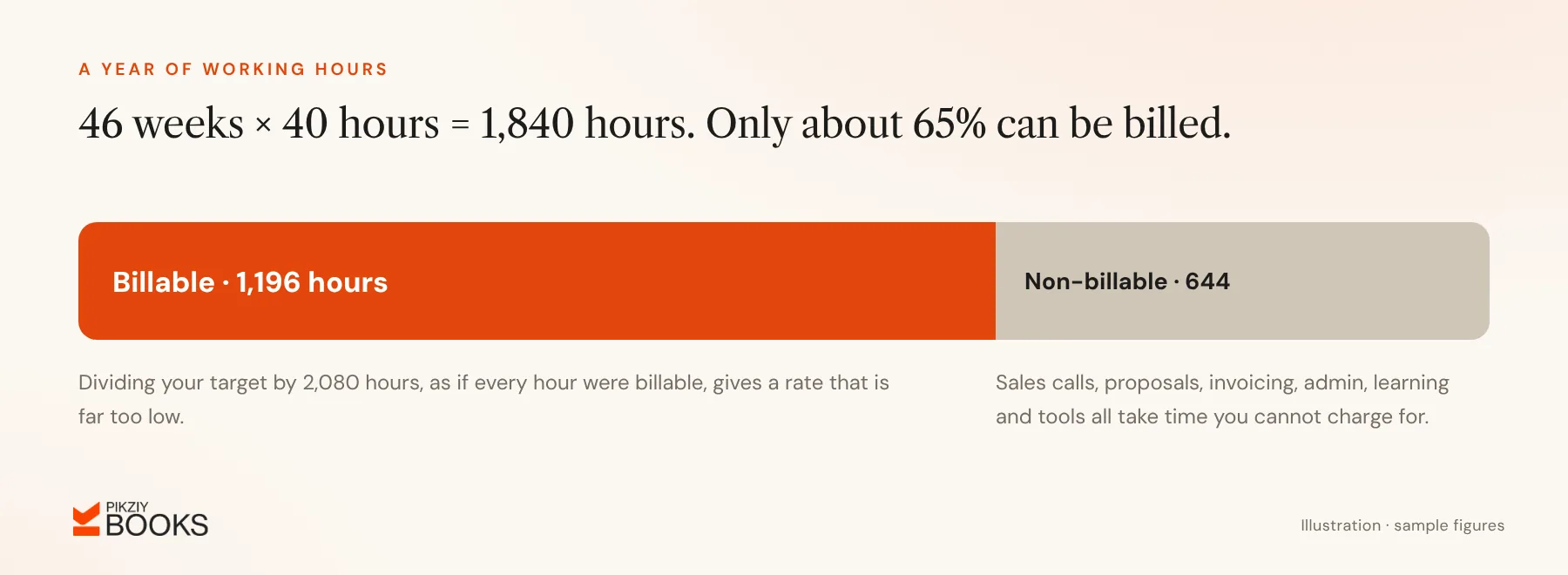
- Working weeks: 52, minus 4 weeks of leave and festivals, minus 2 weeks of sick days = 46 weeks.
- Hours per week: 40.
- Total working hours: 1,840.
- Billable share: about 65%. The rest goes to sales, proposals, admin, invoicing and learning.
- Billable hours: about 1,196.
Step 5: calculate the rate
₹16,56,000 ÷ 1,196 hours = about ₹1,385 an hour. Rounded, that is ₹1,400 an hour, or ₹11,200 for an 8-hour day. If you are GST-registered, this is your rate before GST; GST is charged on top. See how to calculate GST on an invoice.
Step 6: check the market and the value
Your calculated rate is a floor, not a ceiling. Ask yourself:
- What do freelancers with similar experience charge for similar work?
- What is the outcome worth to the client: a website that brings leads, or a brand identity used for years?
- How specialised is your skill, and how many people can do it well?
From hourly rate to project price
Most clients prefer a fixed price. Estimate the hours, multiply by your rate, then add a buffer for revisions and communication.
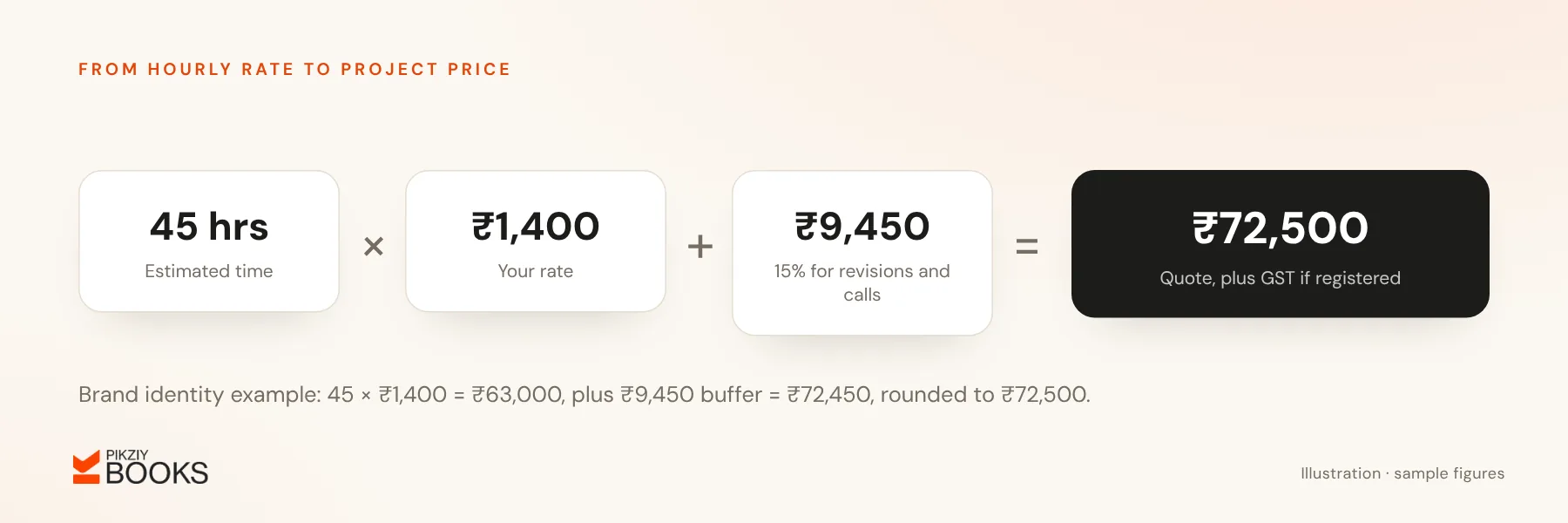
- Estimated hours for a brand identity: 45.
- 45 × ₹1,400 = ₹63,000.
- Add 15% for revisions and meetings: ₹9,450.
- Quote: ₹72,450, rounded to ₹72,500 plus GST.
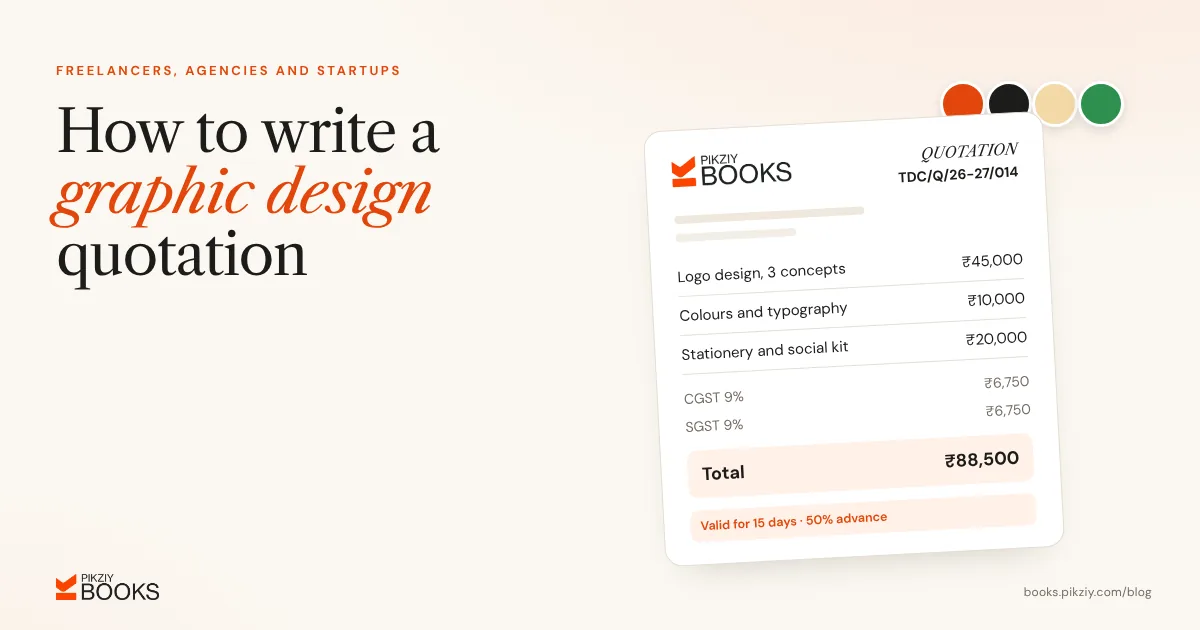
Put the price in a clear quotation with its scope and validity; see quotation vs estimate vs invoice and our guide to a graphic design quotation.
Raising your rates
- Raise rates for new clients first.
- Give existing clients 30 to 60 days' notice.
- Tie increases to added value: faster turnaround, strategy input, results.
Common mistakes
- Dividing your income by 2,080 hours, as if every working hour were billable.
- Forgetting expenses and tax.
- Pricing below cost to win the first client, and never raising it.
- Not charging for revisions beyond the number agreed.
Frequently asked questions
Should I charge hourly or per project?
Should I charge foreign clients more?
How often should I review my rate?
What if a client says my rate is too high?
Next step
Work through the six steps with your own numbers and write down your minimum rate. PikZiy Books turns that rate into clean quotations and invoices, and shows which clients and projects actually pay it.