CGST, SGST and IGST Explained with Easy Examples
CGST, SGST and IGST explained: when to charge each one, how the place of supply decides it and how the tax is split, with clear rupee examples for India.
Quick answer
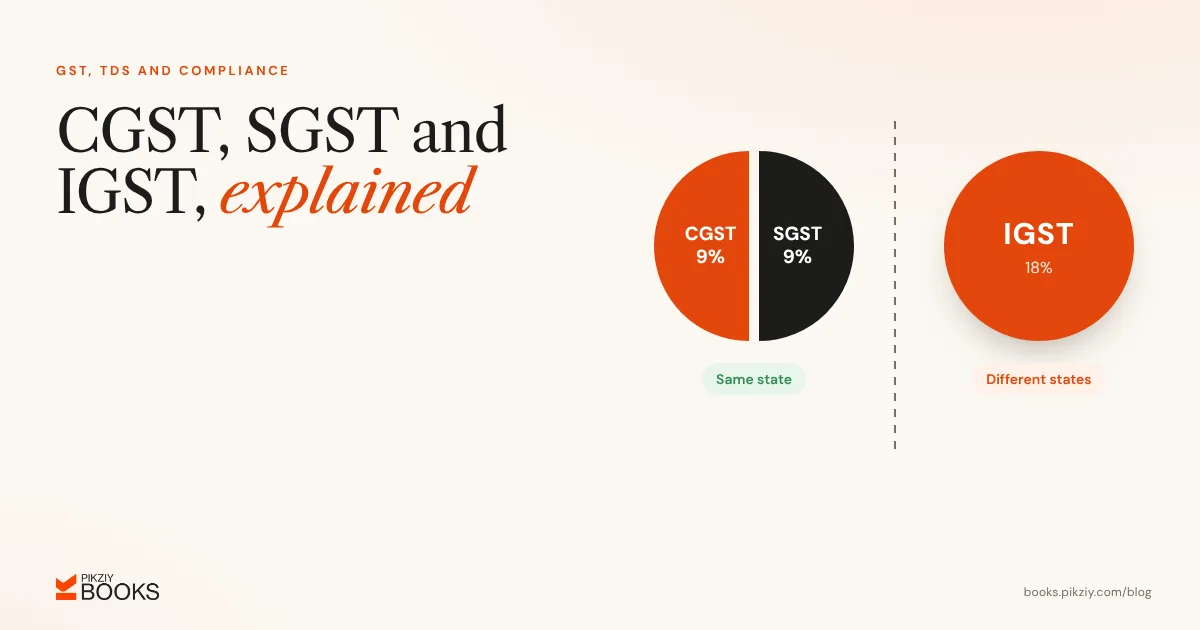
Choosing between CGST, SGST and IGST comes down to one question. If you and the place of supply are in the same state, charge CGST and SGST in equal halves. If they are in different states, or the supply is an export or to an SEZ unit, charge IGST. The total rate is the same either way: 18% is either 9% CGST plus 9% SGST, or 18% IGST. In union territories without a legislature, UTGST replaces SGST.
What each tax is
- CGST (Central GST): the centre's share on supplies within a state.
- SGST (State GST): the state's share on supplies within a state.
- UTGST (Union Territory GST): used instead of SGST in union territories without their own legislature, such as Chandigarh, Ladakh, Lakshadweep, Andaman and Nicobar Islands, and Dadra and Nagar Haveli and Daman and Diu. Delhi, Puducherry and Jammu and Kashmir use SGST.
- IGST (Integrated GST): charged on inter-state supplies, imports, exports and supplies to SEZs. The centre collects it and passes the state share to the state where the goods or services are consumed.
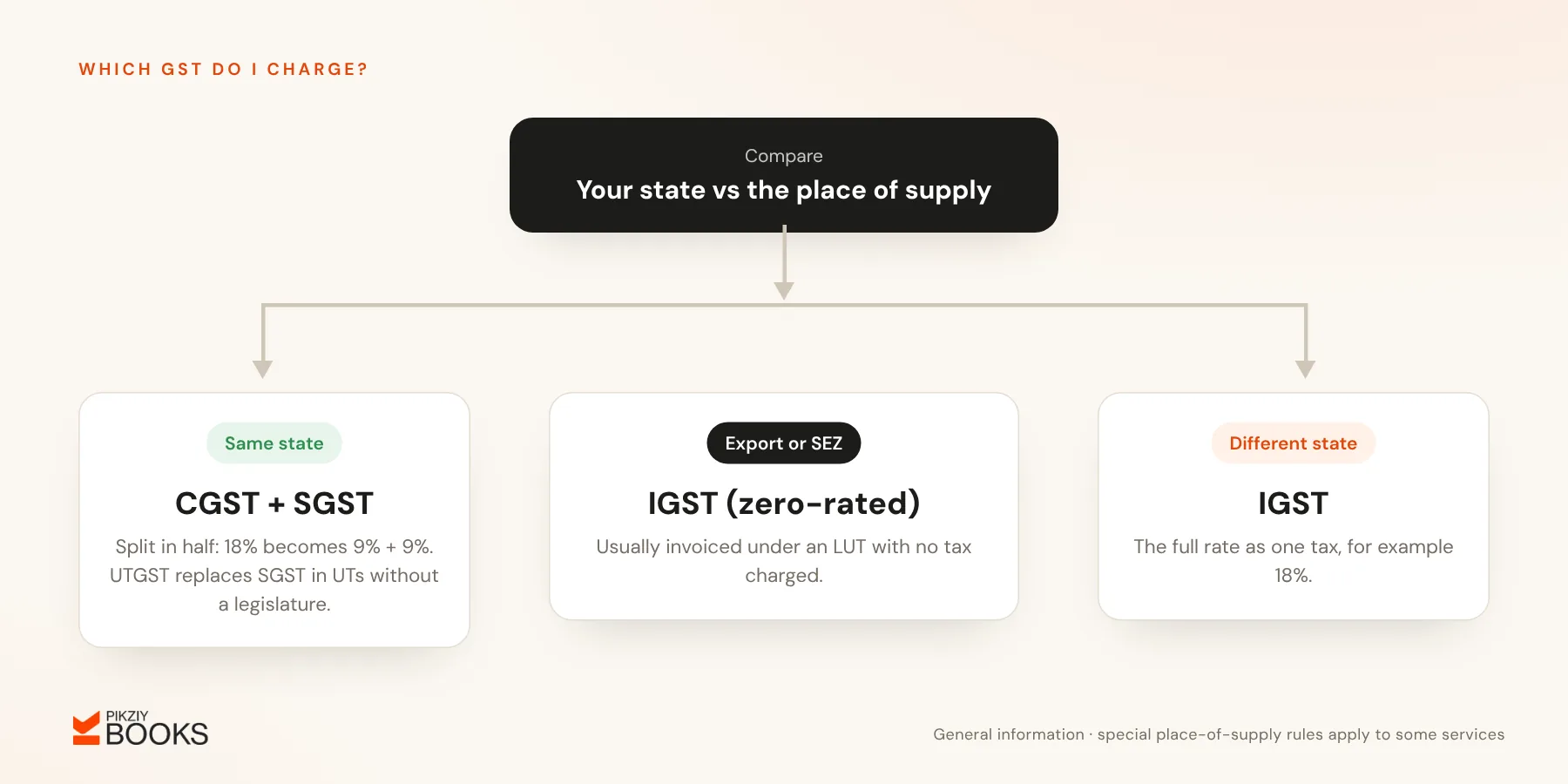
The place of supply decides it
The type of tax depends on two things: where you (the supplier) are registered, and the place of supply. It does not depend on where the buyer happens to be when they place the order. The broad rules are:
- Goods: generally where the goods are delivered.
- Services to a registered business (B2B): generally the recipient's registered location.
- Services to an individual (B2C): the recipient's address on record, or else your own location.
- Special cases: some services have their own rules. For example, services related to immovable property are supplied where the property is, and admission to an event is supplied where the event is held.
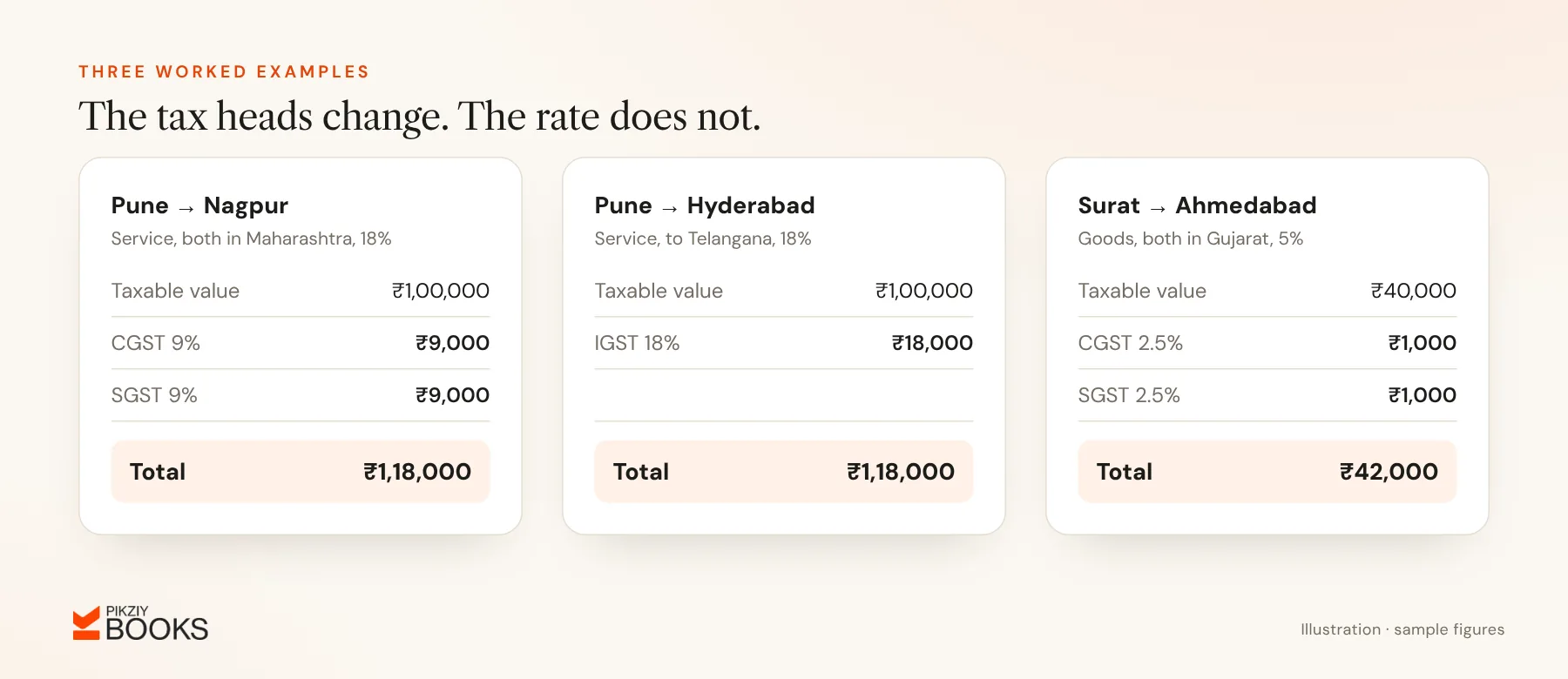
Example 1: a service within the state
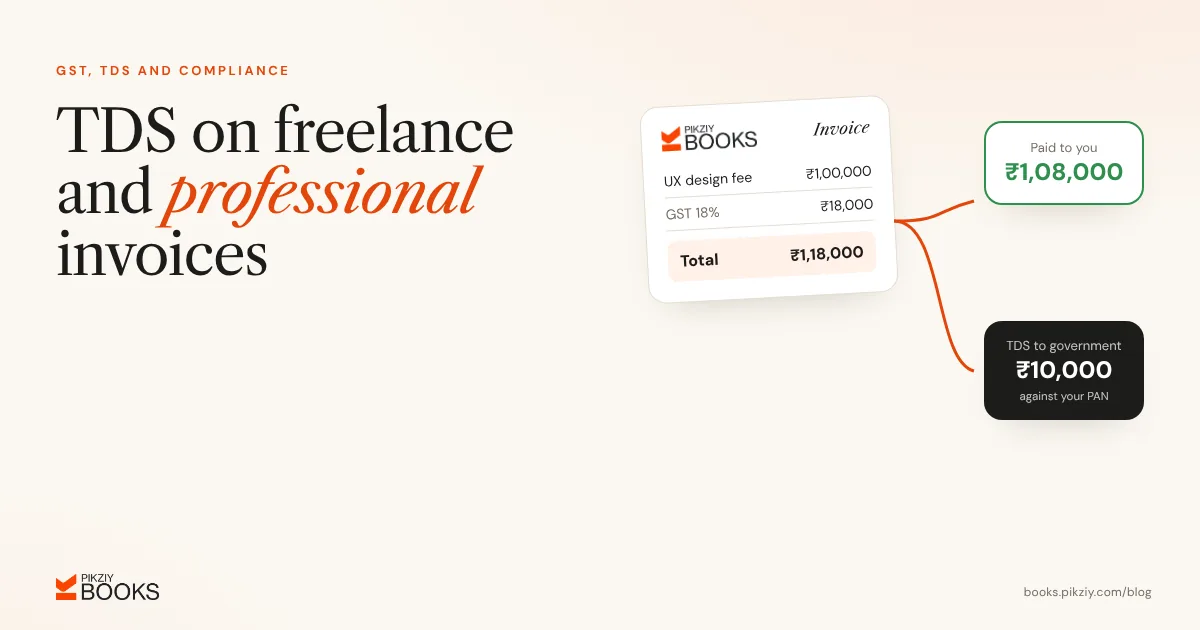
A Pune consultant bills a Nagpur company ₹1,00,000 at 18%. Both are in Maharashtra.
- CGST 9%: ₹9,000
- SGST 9%: ₹9,000
- Total invoice: ₹1,18,000
Example 2: a service to another state
The same consultant bills a Hyderabad company ₹1,00,000. The place of supply is Telangana.
- IGST 18%: ₹18,000
- Total invoice: ₹1,18,000
Example 3: goods at 5%
A Surat textile trader sells fabric worth ₹40,000 to a buyer in Ahmedabad. Both are in Gujarat, and the fabric is taxed at 5%.
- CGST 2.5%: ₹1,000
- SGST 2.5%: ₹1,000
- Total: ₹42,000
Example 4: exporting a service
A Kochi developer invoices a client in Singapore ₹2,00,000. Exports are zero-rated. Most exporters file a Letter of Undertaking (LUT) each year and invoice without IGST, with the note “Supply meant for export under LUT without payment of IGST”. The alternative is to pay IGST and claim it back as a refund. GST for freelancers explains the export conditions.
How input tax credit is used against each tax
When you pay your GST, credit on your purchases is used in a fixed order:
| Credit of | Used against, in order | Never against |
|---|---|---|
| IGST | IGST first, then CGST and SGST (in any order) | — |
| CGST | CGST, then IGST | SGST |
| SGST / UTGST | SGST, then IGST | CGST |
IGST credit must be used up fully before any CGST or SGST credit is used. The GSTR-3B guide works through a full set-off example.
Common mistakes
- Charging CGST and SGST because the buyer's office is local, when the goods are delivered to another state.
- Charging IGST to an out-of-state person when the place of supply is in your own state.
- Splitting 18% as 18% CGST plus 18% SGST. The halves are 9% each.
- Charging SGST in a union territory that uses UTGST.
What if you charged the wrong tax?
If you charged CGST and SGST where IGST was due (or the reverse), you pay the correct tax and claim a refund of the tax you paid wrongly. No interest is charged on the correct tax for this kind of mistake, but the refund takes time and paperwork, so check the place of supply before you invoice.
Frequently asked questions
Is the GST rate higher on inter-state sales?
Can one invoice have both IGST and CGST plus SGST?
Is IGST charged on imports?
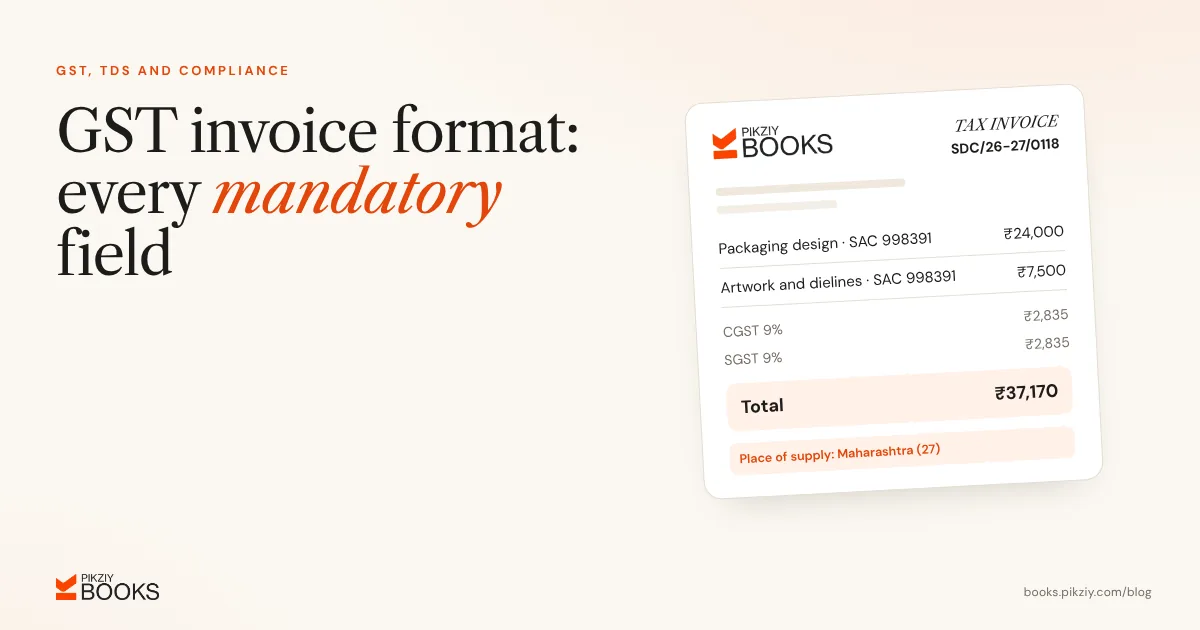
Which state code goes on the invoice?
Next step
Before your next invoice, check the client's state against yours and pick the tax type. PikZiy Books does this for you from the client's GSTIN and the place of supply, so CGST, SGST and IGST are always split correctly.