How to Track Outstanding Customer Payments (With an Ageing Example)
Track outstanding customer payments with a receivables list and an ageing report, set reminder steps and use MSME protections. Worked example included.
Quick answer
To track outstanding customer payments, list every unpaid invoice with its due date and balance, group them by how many days they are overdue (an ageing report), review the list every week and follow a fixed reminder sequence. Chase the oldest and largest amounts first. If you are a registered micro or small enterprise, MSME rules on delayed payments strengthen your position.
What counts as outstanding
An outstanding amount, or receivable, is anything you have invoiced but not yet received. It includes invoices not yet due, overdue invoices and the unpaid balance of part-paid invoices.
Build a receivables list
For each open invoice, record the invoice number, client, invoice date, due date, total, amount received and balance. Update it every time money arrives. Our guide to tracking payments from many clients shows the columns in detail.
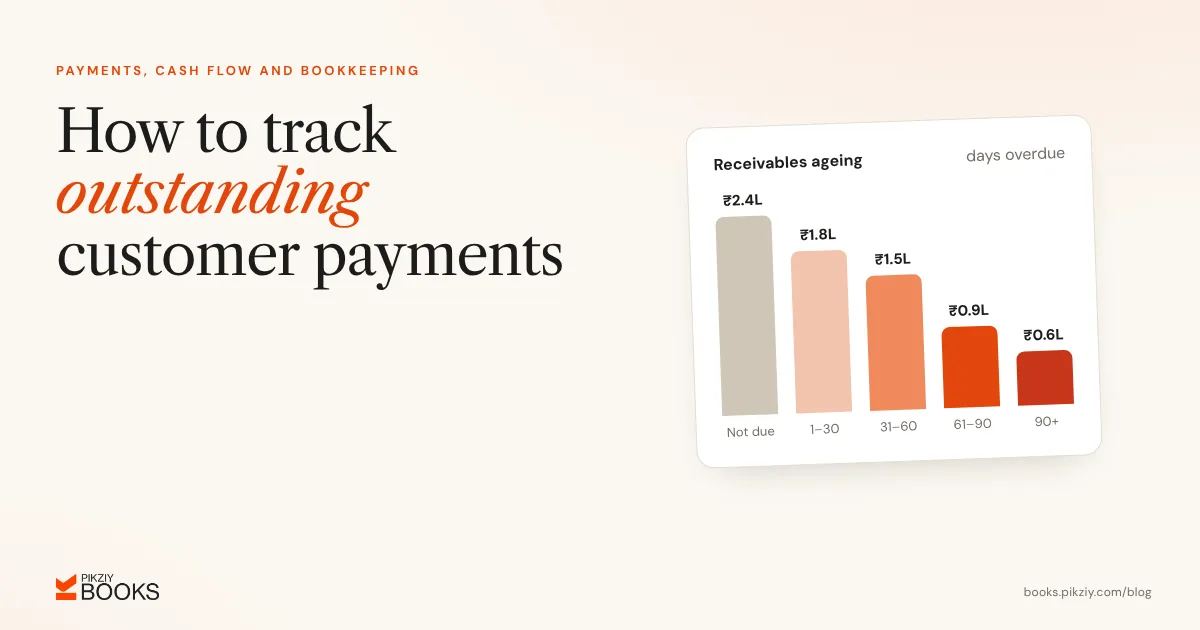
Read it as an ageing report
Group the balances by days past the due date:
- Not yet due.
- 1 to 30 days overdue.
- 31 to 60 days overdue.
- 61 to 90 days overdue.
- More than 90 days overdue.
The older the bucket, the lower the chance of collecting it.
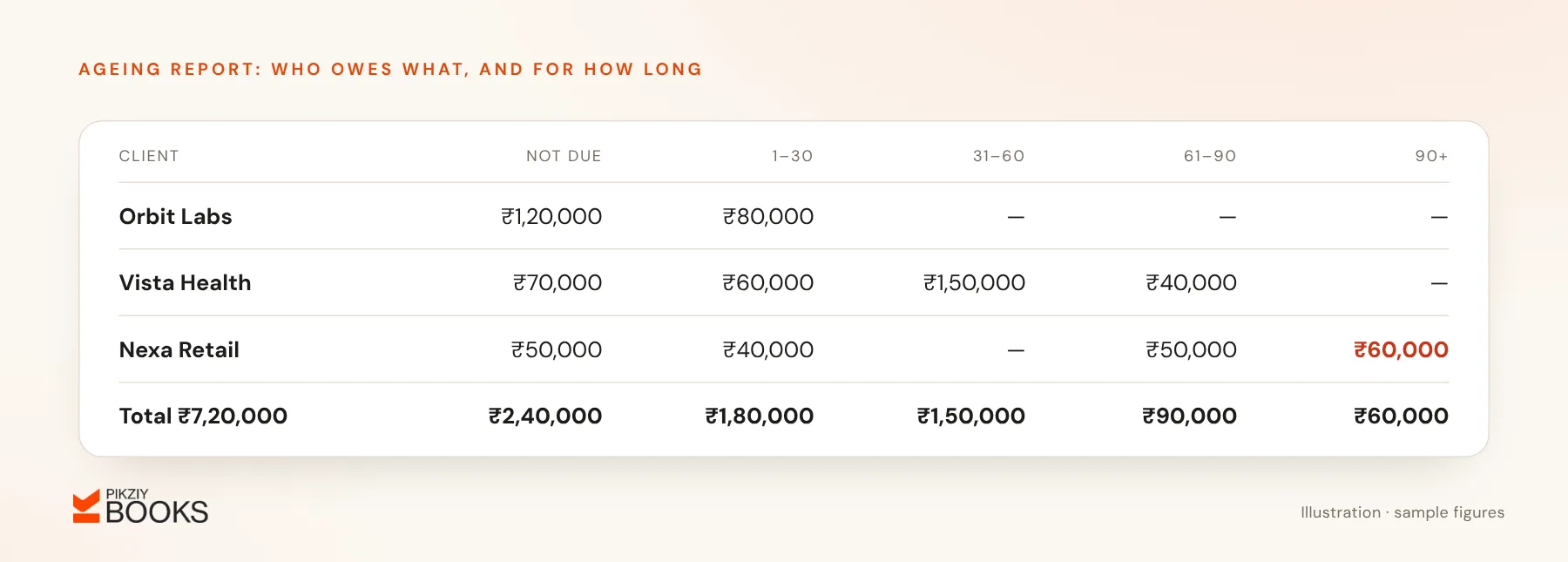
Worked example
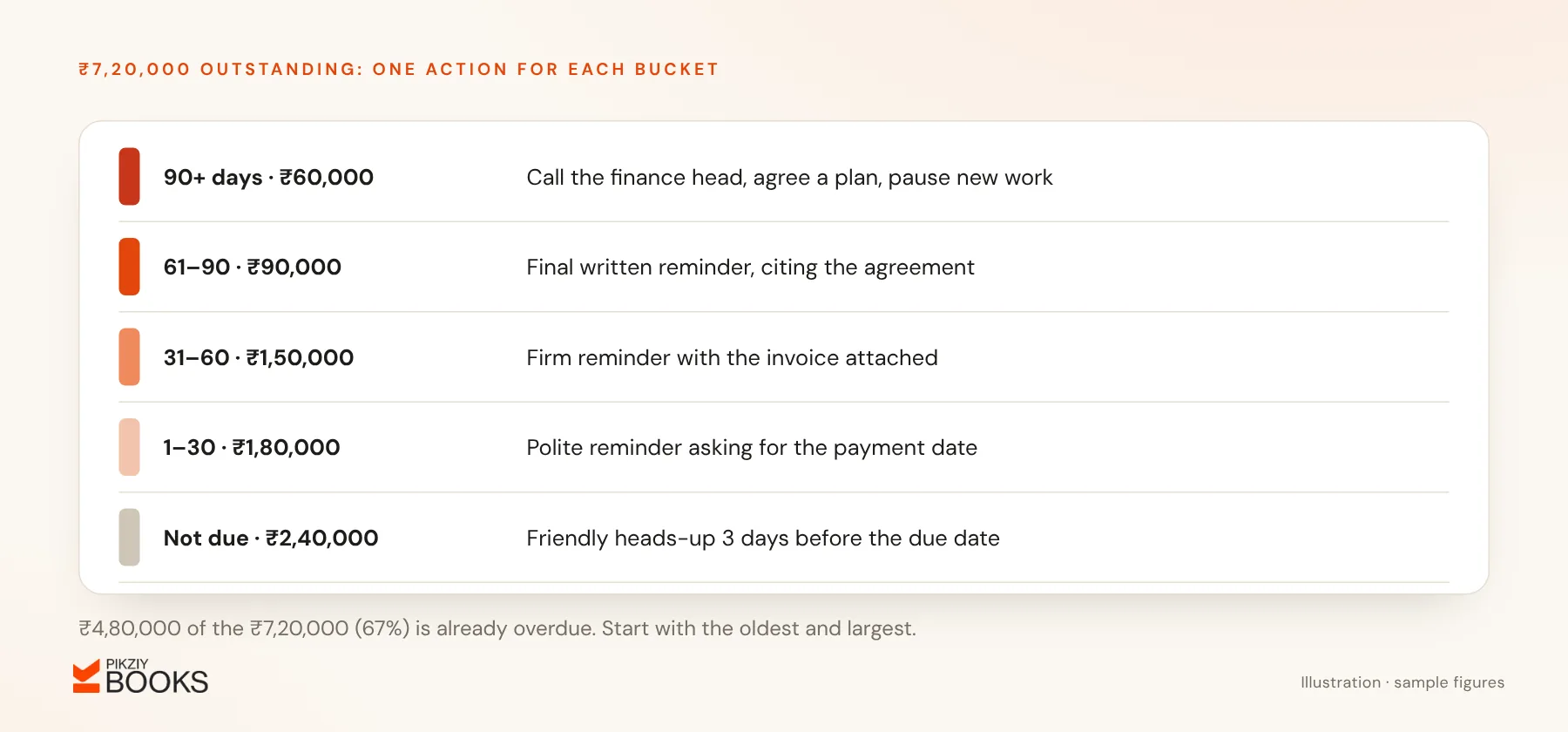
An IT services firm in Nagpur has ₹7,20,000 outstanding. Here is the action plan for each bucket:
| Bucket | Amount | Action |
|---|---|---|
| More than 90 days | ₹60,000 (one client) | Call the client's finance head, propose a payment plan, pause new work |
| 61 to 90 days | ₹90,000 | Final written reminder, referring to the agreement |
| 31 to 60 days | ₹1,50,000 | Firm reminder with the invoice attached |
| 1 to 30 days | ₹1,80,000 | Polite reminder asking for the payment date |
| Not yet due | ₹2,40,000 | Friendly heads-up 3 days before the due date |
Templates for each of these messages are in how to write a polite payment reminder.
Key numbers to watch
- Total outstanding compared with your monthly sales.
- Share overdue: in the example, ₹4,80,000 of ₹7,20,000 (67%) is overdue, which is high.
- Average collection days: how long clients take to pay, on average.
MSME protection on delayed payments
If you are registered on Udyam as a micro or small enterprise, the MSMED Act requires buyers to pay within the agreed period, which cannot exceed 45 days from accepting your goods or services (or 15 days if nothing was agreed). Late payments attract compound interest at three times the bank rate notified by the RBI, and you can file a case on the MSME Samadhaan portal for the facilitation council to resolve. Mention your Udyam number on your invoices so buyers know.
Prevent tomorrow's overdue invoices
- Take advances on projects; see advance and partial payments.
- Agree payment terms in writing.
- Invoice promptly after delivery.
- Confirm the finance contact and any purchase order requirements upfront.
Common mistakes
- Looking only at the total outstanding, not at its age.
- Writing off debts too quickly, or never.
- No consistent follow-up schedule.
- Not recording part payments.
Frequently asked questions
When should I write off a bad debt?
Can I charge interest on late payments?
How often should I review outstanding payments?
Does GST have to be paid on invoices the client has not paid yet?
Next step
Sort your open invoices into the five ageing buckets today and act on the oldest first. PikZiy Books builds the ageing report from your invoices and payments automatically, so you see who owes what, and for how long, at a glance.