Cash Flow vs Profit: Why They Are Different (And Why It Matters)
Cash flow vs profit: a business can be profitable and still run out of cash. See the difference with a simple credit-sale example, and what to do about it.
Quick answer
On cash flow vs profit: profit is income minus expenses for a period, recorded when sales and costs happen. Cash flow is the money actually moving in and out of your bank in that period. They differ because of credit sales, advances, equipment purchases, loan repayments and taxes, so a business can be profitable and still short of cash.
Definitions
- Profit: revenue earned minus expenses incurred, whether or not money has moved.
- Cash flow: cash received minus cash paid out in the period.
A credit sale example
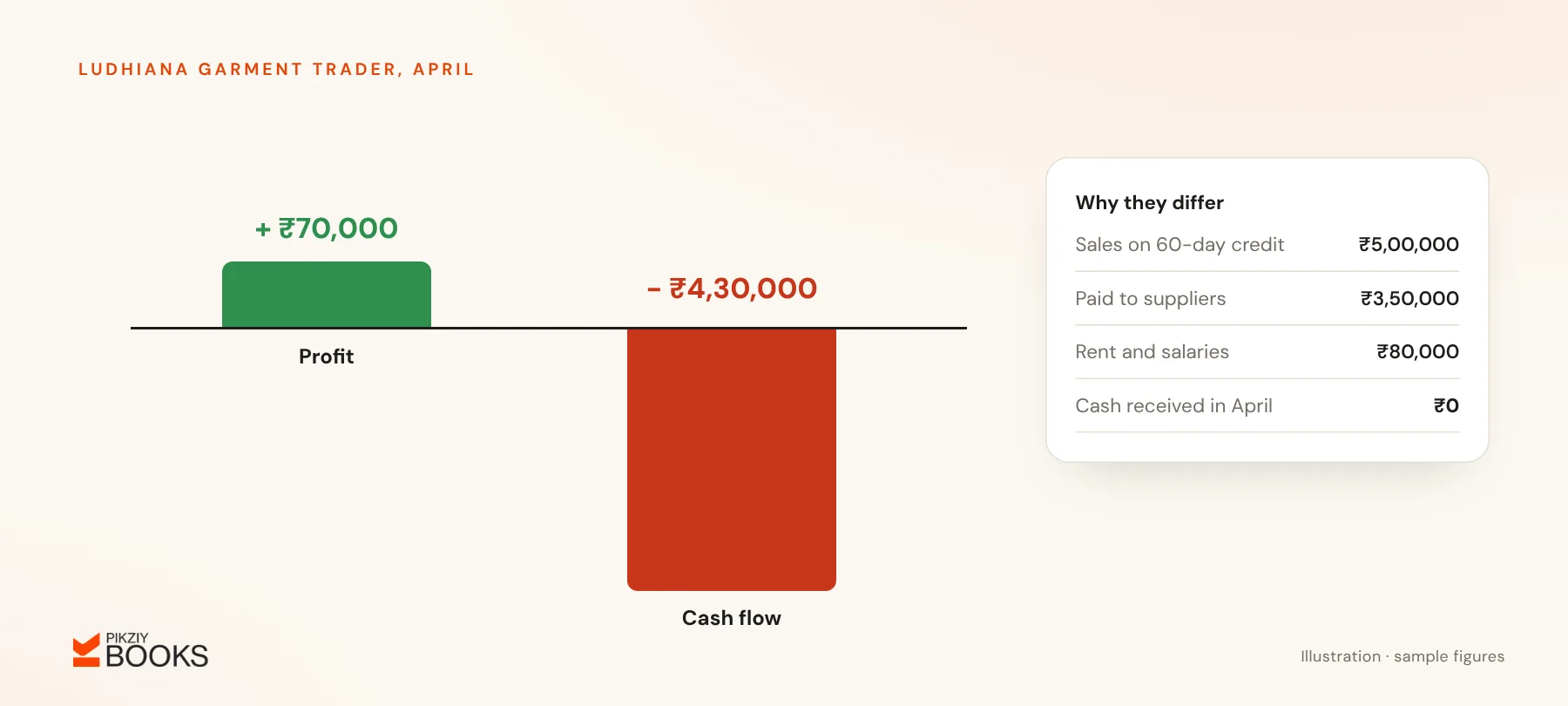
A garment trader in Ludhiana, in April:
- Sells goods worth ₹5,00,000 on 60-day credit.
- Pays suppliers ₹3,50,000 in cash for those goods.
- Pays rent and salaries of ₹80,000.
| Profit for April | Cash flow for April | |
|---|---|---|
| Sales | ₹5,00,000 | ₹0 (customers pay in June) |
| Paid to suppliers | − ₹3,50,000 | − ₹3,50,000 |
| Rent and salaries | − ₹80,000 | − ₹80,000 |
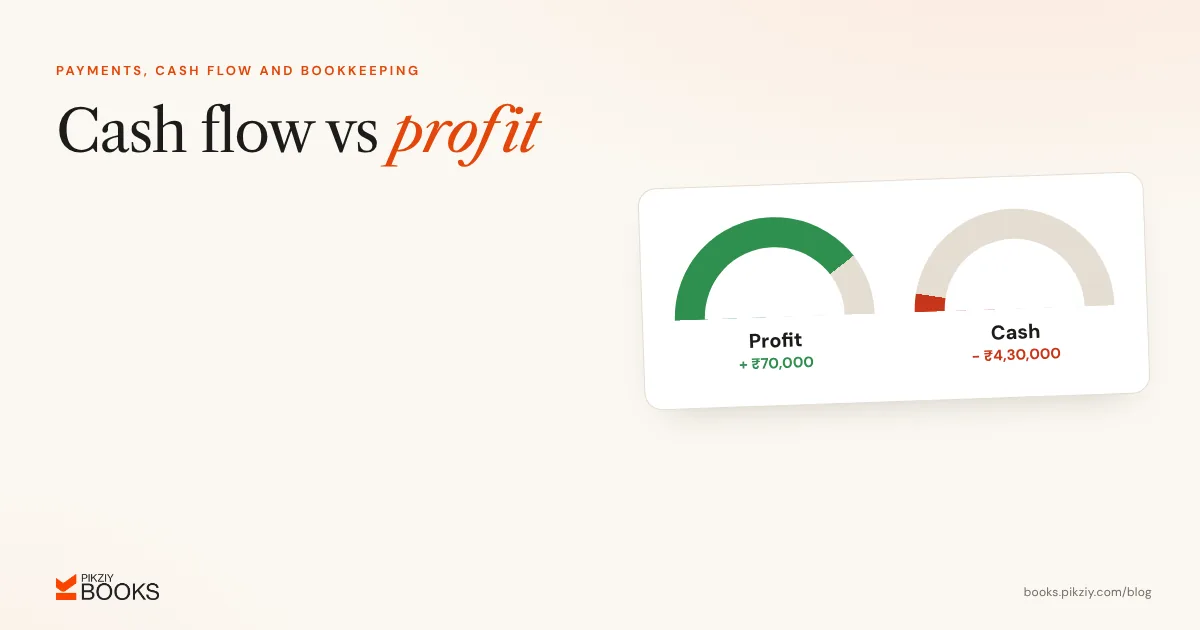
| Result | + ₹70,000 | − ₹4,30,000 |
The business made a profit, but it has ₹4,30,000 less cash until its customers pay in June.
Other reasons they differ
- Equipment purchases: buying a ₹1,50,000 machine uses cash now, but only its depreciation reduces profit each year.
- Loans: a loan adds cash but is not income; repaying the principal uses cash but is not an expense.
- Advances from clients: cash arrives before the income is earned.
- GST: GST you collect is not your income, but it sits in your bank until you pay it.
- Owner's drawings: reduce cash but are not business expenses.
Why it matters
- Salaries, rent and GST are paid in cash, not in profit.
- Fast growth on credit can create a cash shortage.
- Lenders look at both.
This is the most common way new agencies get into trouble; see financial mistakes new agencies make.
How to manage cash flow
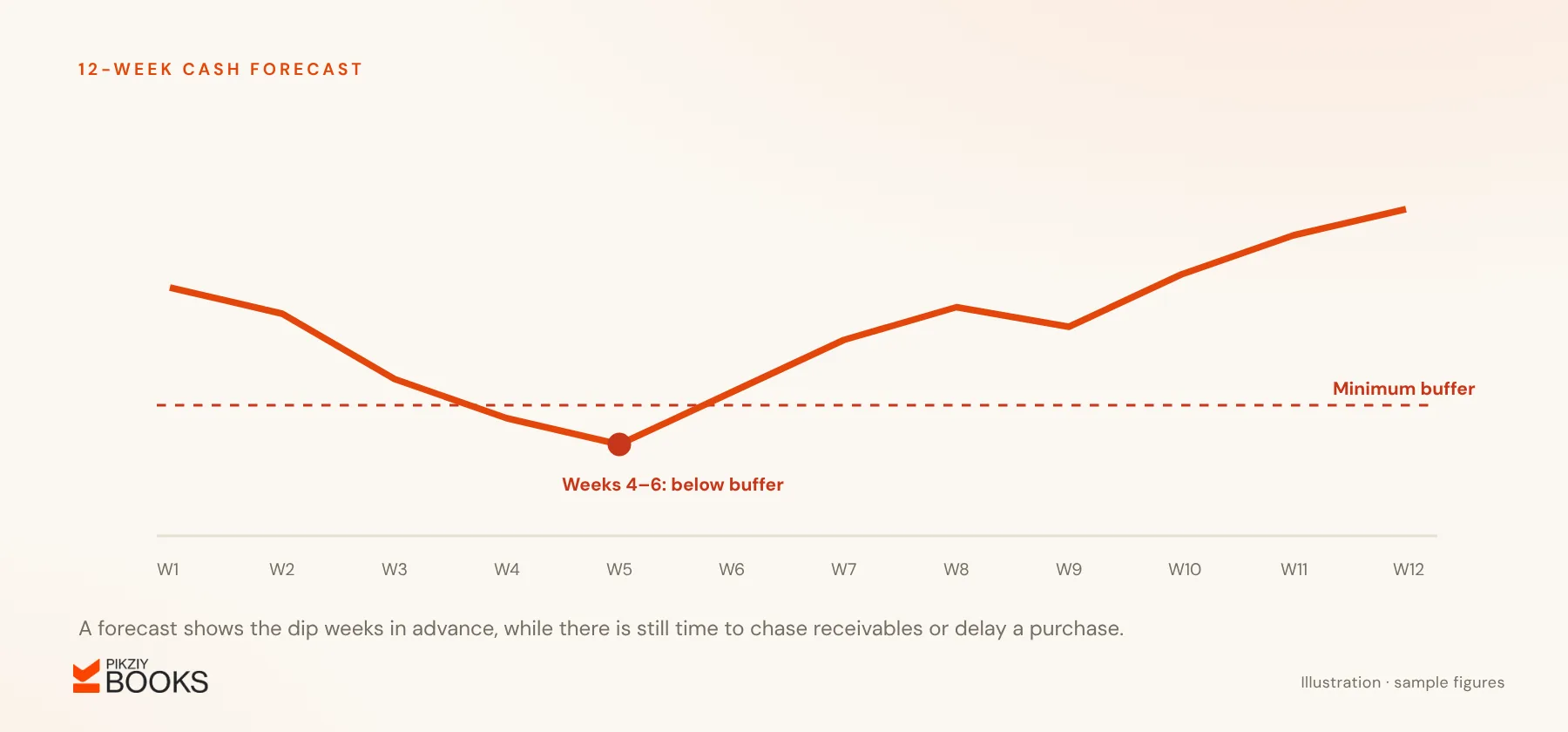
- Forecast cash for the next 8 to 12 weeks.
- Shorten credit periods and take advances.
- Negotiate longer terms with suppliers.
- Keep a cash buffer of a few months of fixed costs.
- Review receivables weekly; see how to track outstanding customer payments.
Frequently asked questions
Can a business with losses have positive cash flow?
Which matters more, cash flow or profit?
Where do I see profit and where do I see cash?
Does GST affect cash flow?
Next step
Write down your expected cash in and out for each of the next eight weeks. PikZiy Books shows your profit and what customers owe you side by side, so you can see a cash gap before it arrives.