GST Mistakes That Can Disrupt Your Business Accounting
Wrong rates, wrong codes, unmatched ITC and late returns cause notices and cash flow pain. The 10 most common GST mistakes and how to prevent them.
Quick answer
The GST mistakes that cause the most trouble are: using an outdated rate, using the wrong HSN or SAC code, charging the wrong type of tax, claiming input tax credit that is not in GSTR-2B, claiming blocked credits, not paying suppliers within 180 days, leaving GSTR-1 errors for later, filing late, ignoring reverse charge and mixing personal with business spending. A short monthly routine prevents most of them.
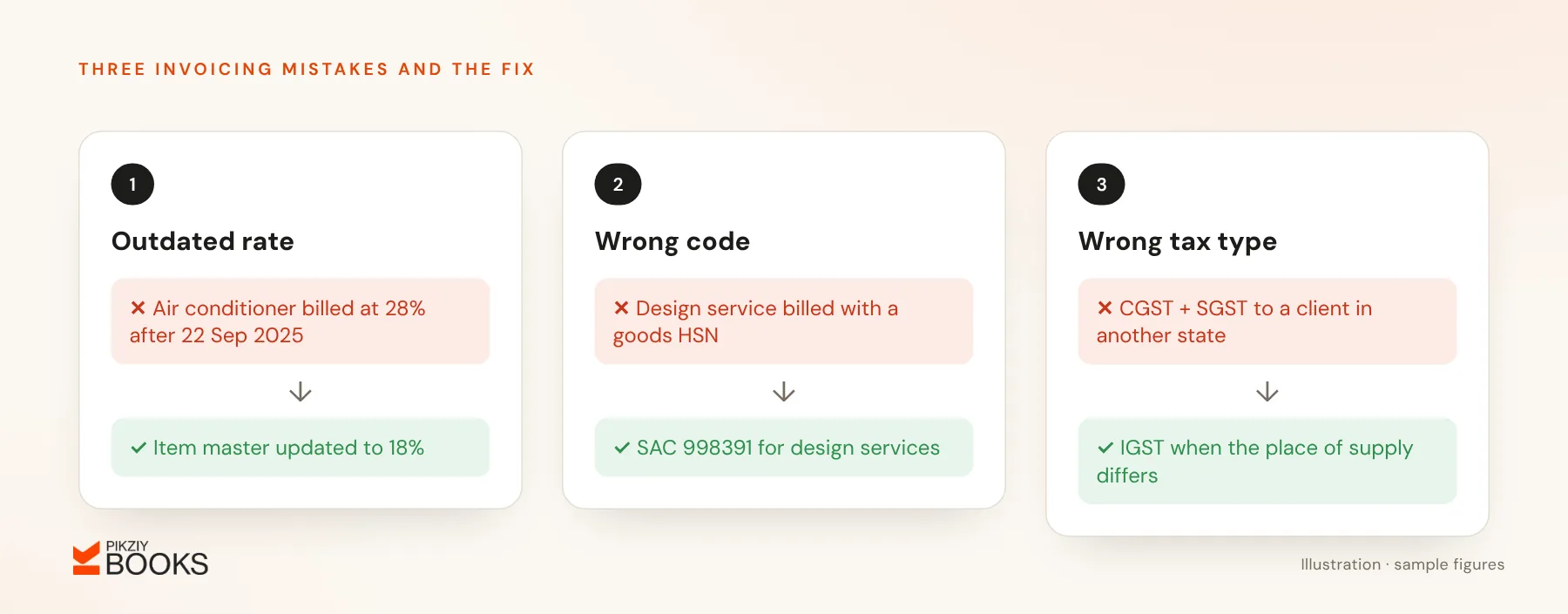
1. Using an outdated rate
GST rates were overhauled on 22 September 2025: most items moved into the 5% and 18% slabs, and a 40% slab was added for certain goods. Item lists and invoice templates set up before then may still carry 12% or 28%. Review every item in your product and service list, and recheck after any future rate change.
2. Using the wrong HSN or SAC code
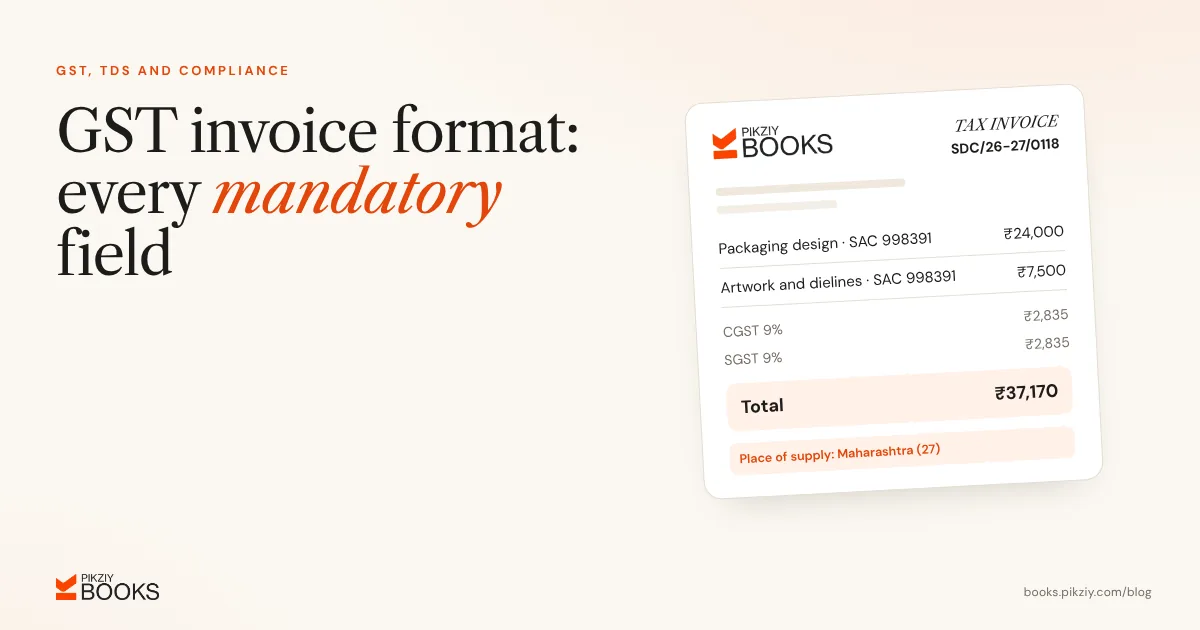
A wrong code usually means a wrong rate. If an item could fall under two headings, get written advice and keep it on file. See HSN vs SAC codes.
3. Charging the wrong type of tax
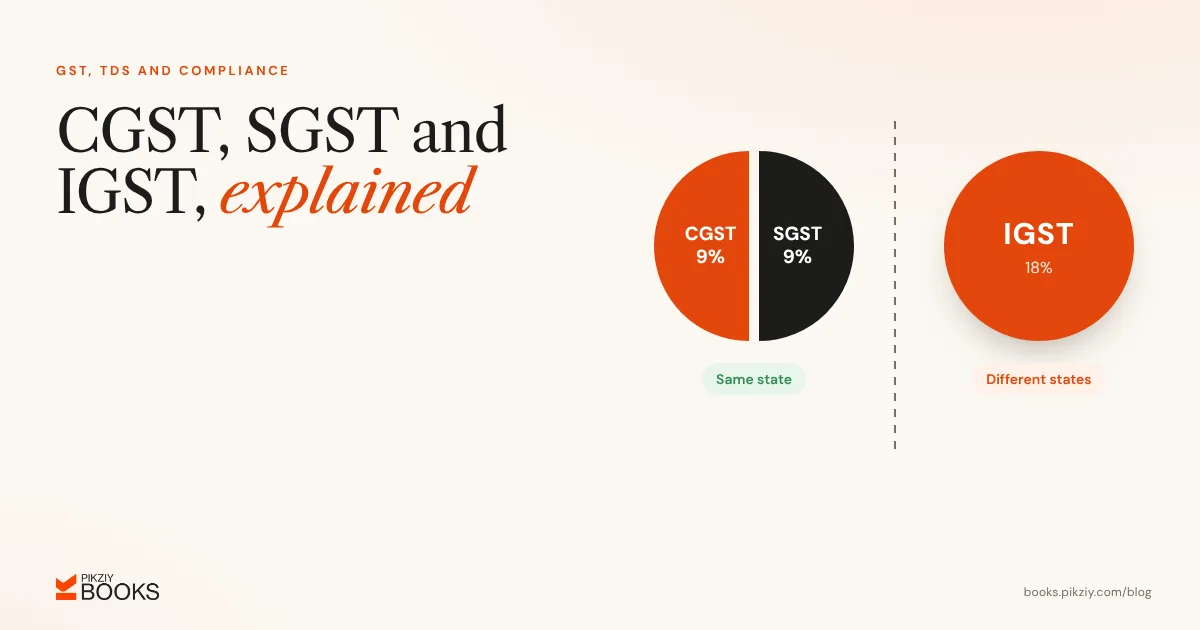
Charging CGST plus SGST on an inter-state supply, or IGST on an intra-state one, means paying the correct tax again and waiting for a refund of the wrong one. CGST, SGST and IGST explained shows how the place of supply decides it.
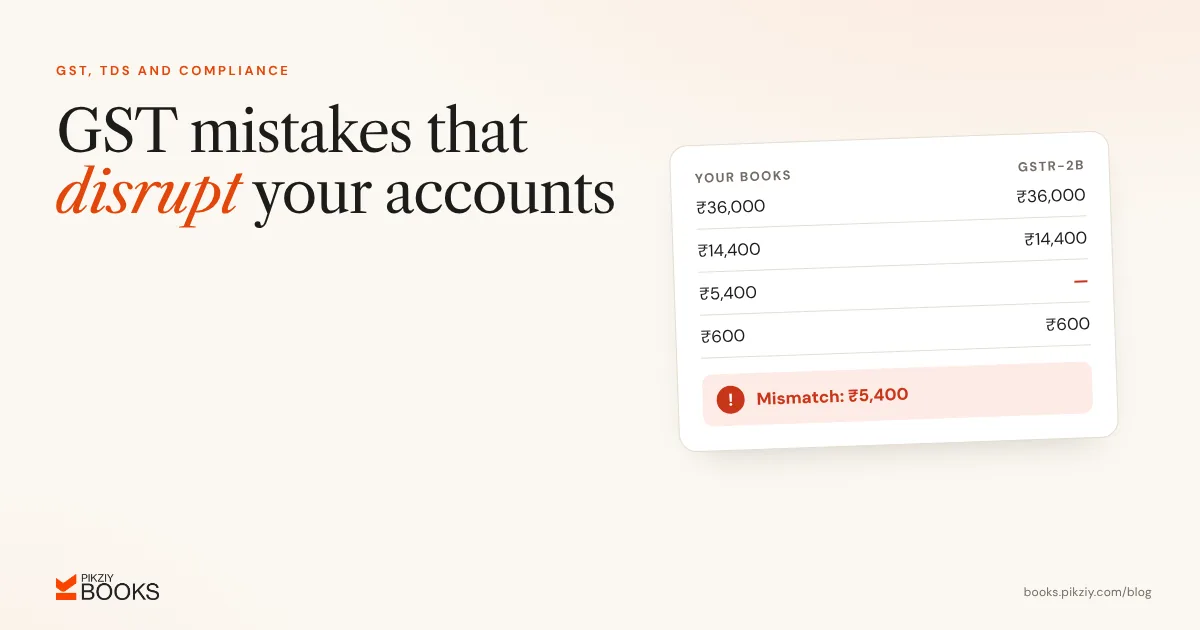
4. Claiming ITC that is not in GSTR-2B
Credit is only available once your supplier has reported the invoice and it shows in your GSTR-2B. Claiming from your own purchase register leads to mismatch notices.
5. Claiming blocked credits
Staff meals, most cars, gifts and club memberships are common blocked items. Tag these purchases in your books so they never reach your ITC claim. The full list is in our input tax credit guide.
6. Not paying suppliers within 180 days
If a supplier's invoice stays unpaid for more than 180 days from its date, you must reverse the credit you took, with interest. Keep an eye on what you owe, not only on what you are owed.
7. Leaving GSTR-1 errors for later
Since the July 2025 tax period, the liability in GSTR-3B is locked to your GSTR-1 data, so an error in GSTR-1 flows straight into what you pay. Correct it through GSTR-1A before you file GSTR-3B. See GSTR-1 explained.
8. Filing late
Late returns attract daily late fees and interest, and hold up your buyers' credit. Repeated non-filing can lead to your registration being suspended or cancelled, and a return can no longer be filed at all once three years have passed from its due date.
9. Ignoring reverse charge
Some services, such as transport by a goods transport agency or legal services from an advocate, make you, the buyer, liable to pay the GST. This tax must be paid in cash. Missing it tends to surface in audits, with interest.
10. Mixing personal and business spending
Personal purchases in business records lead to wrong ITC claims and unclear profits. Use a separate business bank account and card.
A monthly prevention routine
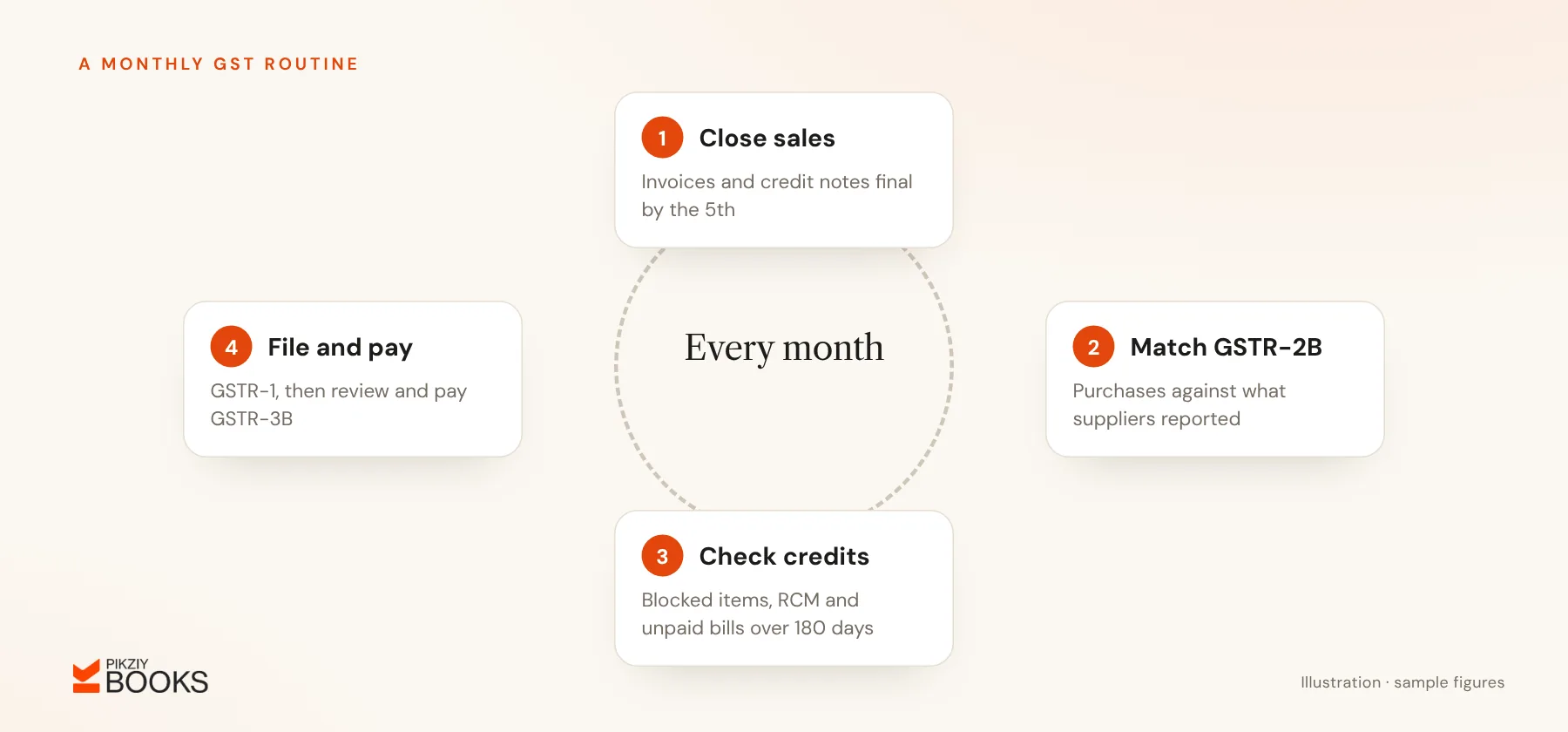
- Finalise all sales invoices and credit notes by the 5th.
- Review supplier invoices in IMS and reconcile purchases with GSTR-2B.
- Mark blocked and ineligible credits, and supplier bills unpaid for more than 180 days.
- Check reverse charge purchases.
- File GSTR-1, review the pre-filled GSTR-3B, pay and file. See GSTR-3B explained.
- Save a PDF summary of what you filed.
Worked example
A Jaipur electronics shop had air conditioners set at 28% in its billing software. On 22 September 2025 the rate on air conditioners fell to 18%, but the item list was not updated. For two months the shop charged customers 28%.
Tax collected from customers has to be paid to the government even when it was charged at the wrong rate, so the extra 10% could not simply be kept. The shop had to deal with customer complaints and issue credit notes where buyers asked for a correction, and its accountant spent days untangling the returns. Updating the item list on the day the new rates took effect would have taken ten minutes.
Frequently asked questions
What is the most common reason for GST notices?
Can software prevent all GST mistakes?
How do I fix a mistake on an invoice I have already reported?
Are GST penalties changing?
Next step
Put the six-step routine in your calendar for the first week of every month. PikZiy Books keeps item rates and codes in one place, splits the tax by place of supply automatically and keeps your sales and purchase records ready to reconcile.