How to Calculate GST on an Invoice (Exclusive and Inclusive)
How to calculate GST on an invoice, step by step: adding GST to a price, removing it from an inclusive amount, discounts and multi-rate invoices.
Quick answer
Here is how to calculate GST on any invoice. To add GST to a price: GST = taxable value × rate ÷ 100, and total = taxable value + GST. To take GST out of an inclusive price: GST = inclusive amount × rate ÷ (100 + rate), and taxable value = inclusive amount − GST. Apply any discount shown on the invoice before you calculate GST.
Step 1: choose the correct rate
Find the GST rate for your goods (by HSN code) or services (by SAC code). Since 22 September 2025, most items fall in the 5% or 18% slabs, with 40% for a short list of luxury and sin goods and 0% for essentials. Most professional services are taxed at 18%. If you are not sure of the code, start with HSN vs SAC codes.
Step 2: decide whether the price is exclusive or inclusive
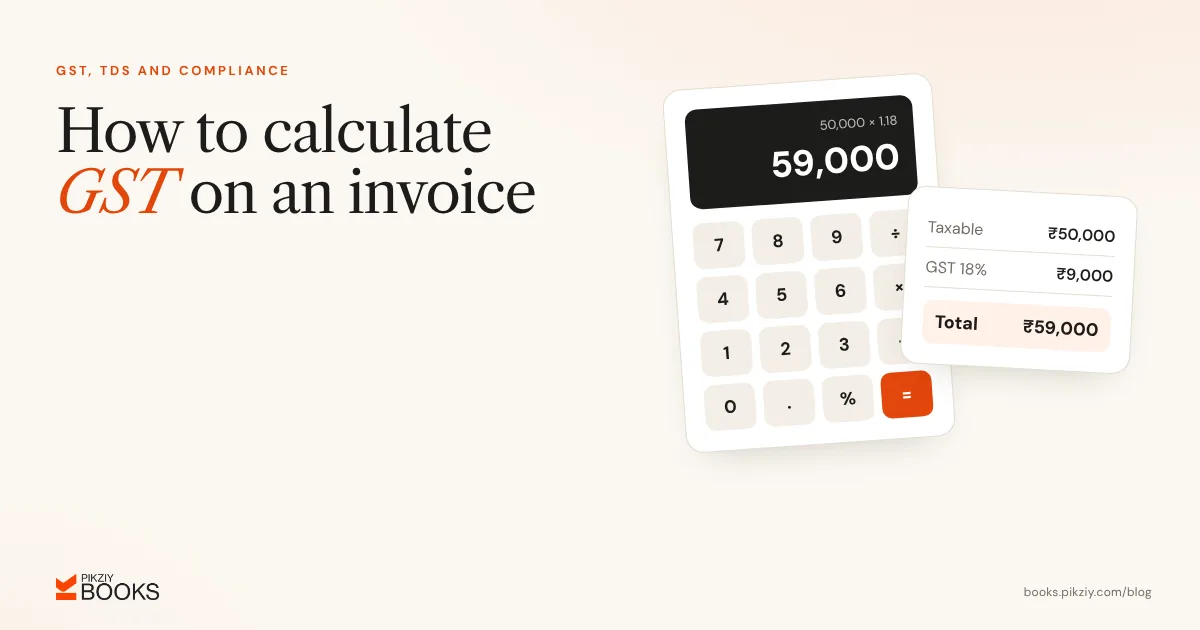
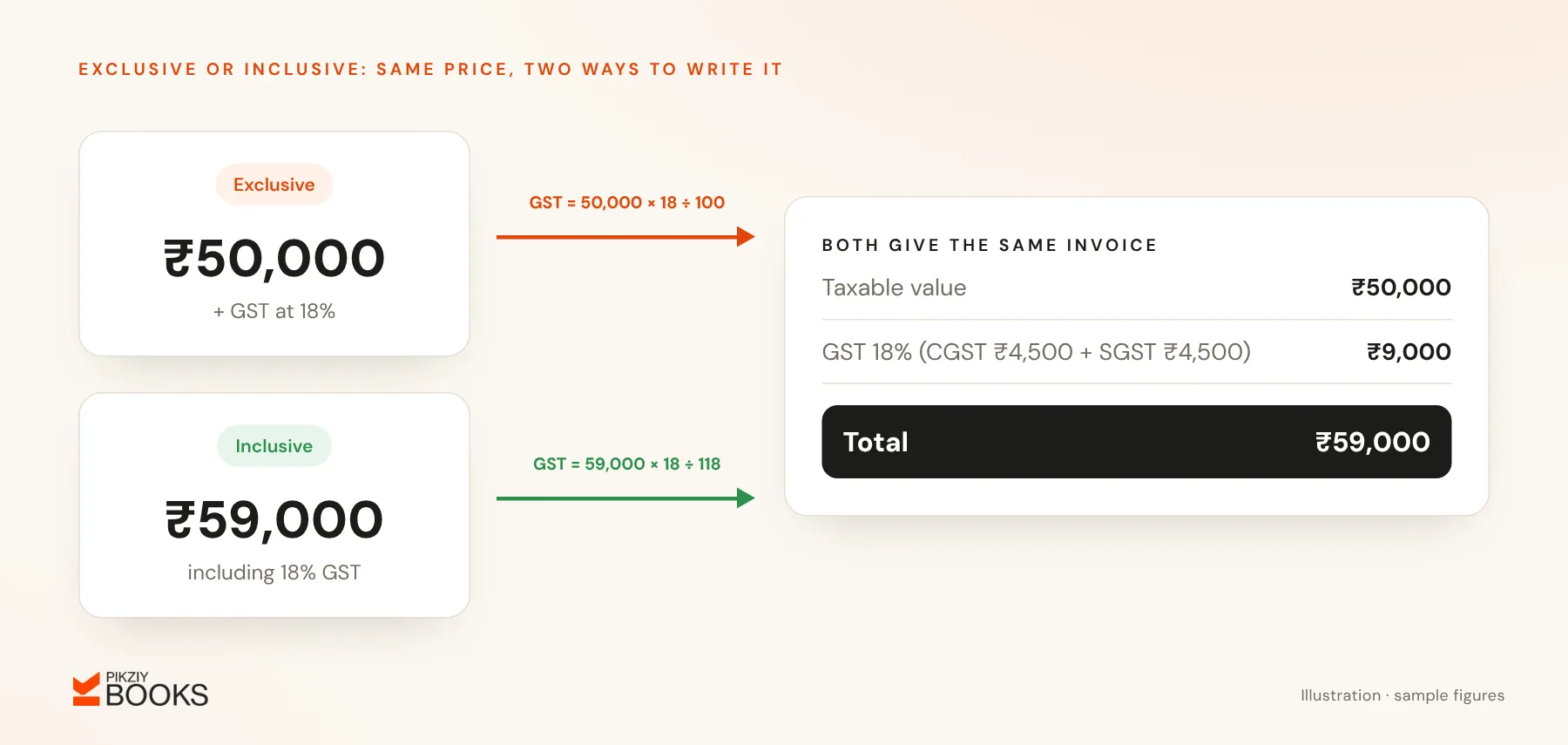
- Exclusive: you quote ₹50,000 “plus GST”. GST is added on top.
- Inclusive: you quote ₹59,000 “including GST”. GST is already inside the price.
Always say which one you mean in your quotation. Most disputes about GST on small invoices start with a quote that just said “₹50,000”.
Step 3a: the formula for exclusive prices
- GST = Taxable value × Rate ÷ 100
- Total = Taxable value + GST
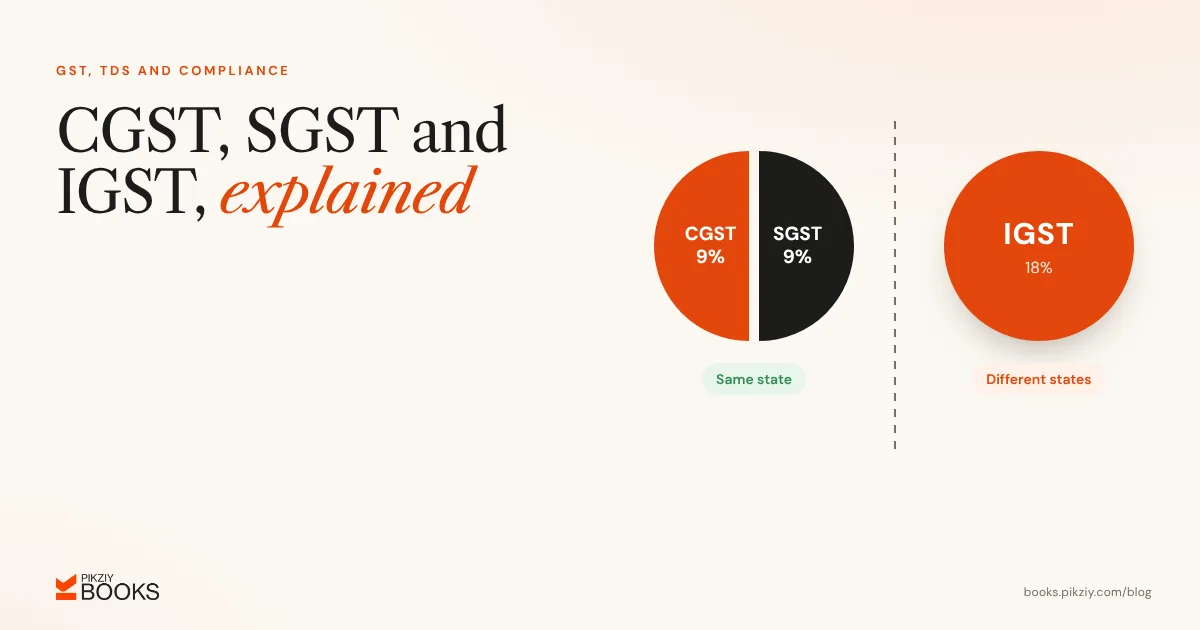
Example: ₹50,000 at 18%. GST = 50,000 × 18 ÷ 100 = ₹9,000, so the total is ₹59,000. If the client is in your state, show it as CGST ₹4,500 and SGST ₹4,500; if not, as IGST ₹9,000.
Step 3b: the formula for inclusive prices
- GST = Inclusive amount × Rate ÷ (100 + Rate)
- Taxable value = Inclusive amount − GST
Example: ₹10,000 including 18% GST. GST = 10,000 × 18 ÷ 118 = ₹1,525.42, and the taxable value is ₹8,474.58.
| Rate | Multiply the inclusive amount by | ₹10,000 inclusive gives GST of |
|---|---|---|
| 5% | 5 ÷ 105 | ₹476.19 |
| 18% | 18 ÷ 118 | ₹1,525.42 |
| 40% | 40 ÷ 140 | ₹2,857.14 |
Step 4: apply discounts first
A discount shown on the invoice at the time of supply reduces the taxable value, so calculate GST after the discount.
Example: list price ₹20,000, 10% discount, 18% GST.
- Discount: ₹2,000
- Taxable value: ₹18,000
- GST at 18%: ₹3,240
- Total: ₹21,240
Step 5: invoices with more than one rate
A Delhi packaging studio supplies a Delhi client with cartons and a design service on one invoice. Each line has its own rate, so calculate GST line by line and then add up.
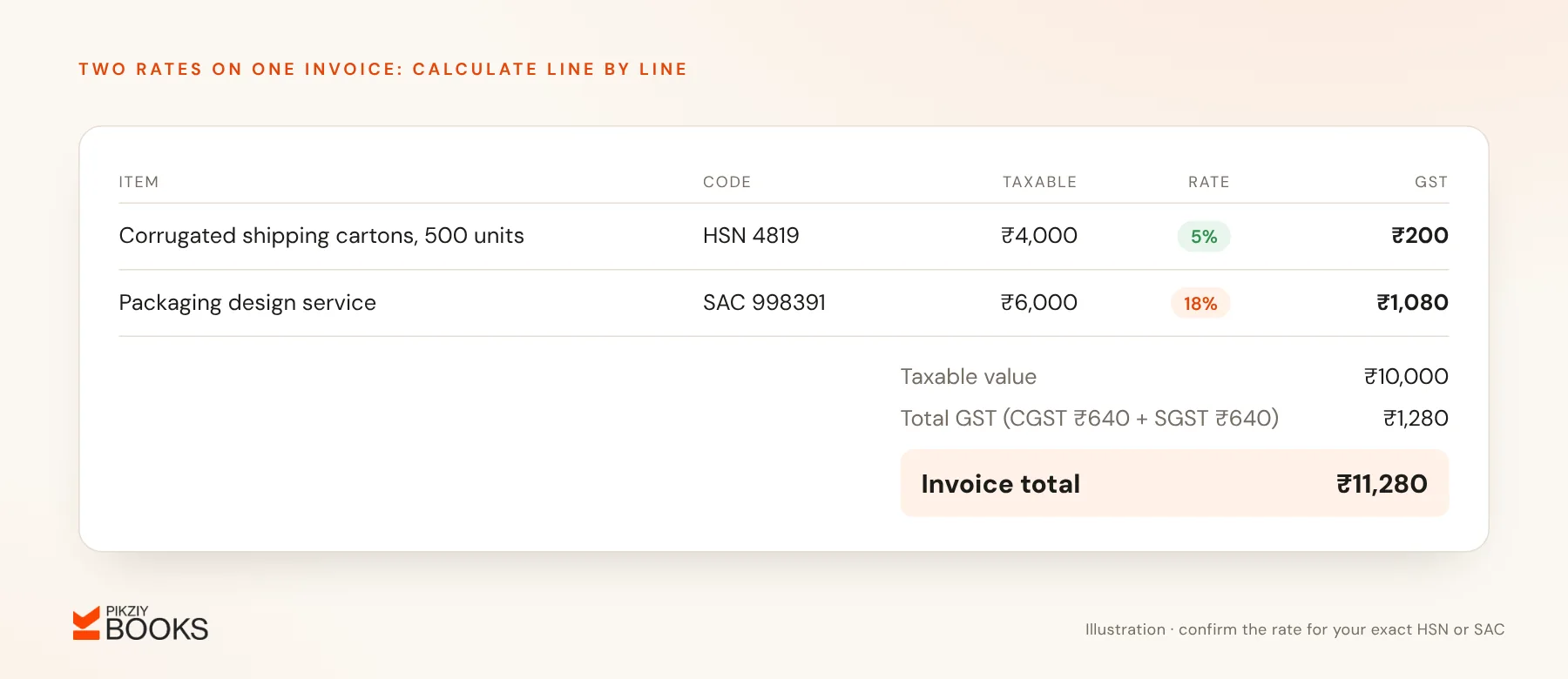
| Line | Taxable value | Rate | GST |
|---|---|---|---|
| Corrugated shipping cartons (HSN 4819) | ₹4,000 | 5% | ₹200 |
| Packaging design (SAC 998391) | ₹6,000 | 18% | ₹1,080 |
| Total | ₹10,000 | ₹1,280 |
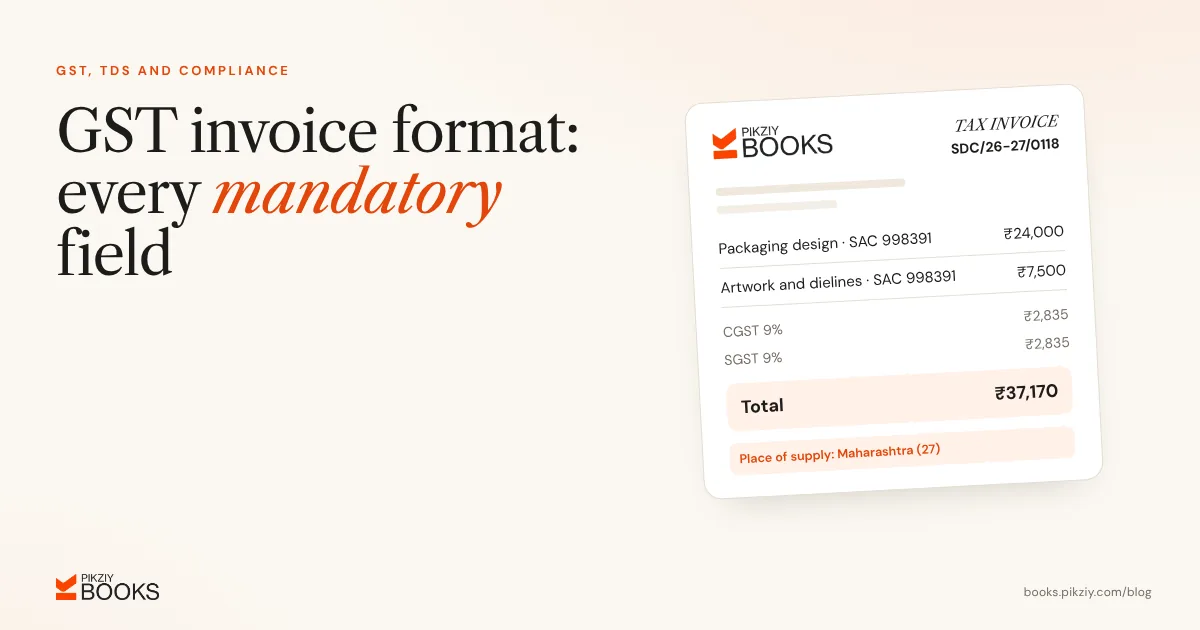
Because the client is in Delhi too, the ₹1,280 is shown as CGST ₹640 and SGST ₹640, and the invoice total is ₹11,280.
Rounding
Calculate tax to two decimals. You can round the final invoice total to the nearest rupee and show the difference on a “Round off” line. Whichever method you choose, use it on every invoice.
Common mistakes
- Taking 18% off an inclusive price instead of using 18/118.
- Applying GST before the discount.
- Using one rate for a mixed invoice.
- Forgetting to split the tax into CGST and SGST for a client in your own state. See CGST, SGST and IGST explained.
Frequently asked questions
What is 18% GST on ₹1 lakh?
How do I calculate GST backwards from a total?
Does GST apply to shipping charges on the invoice?
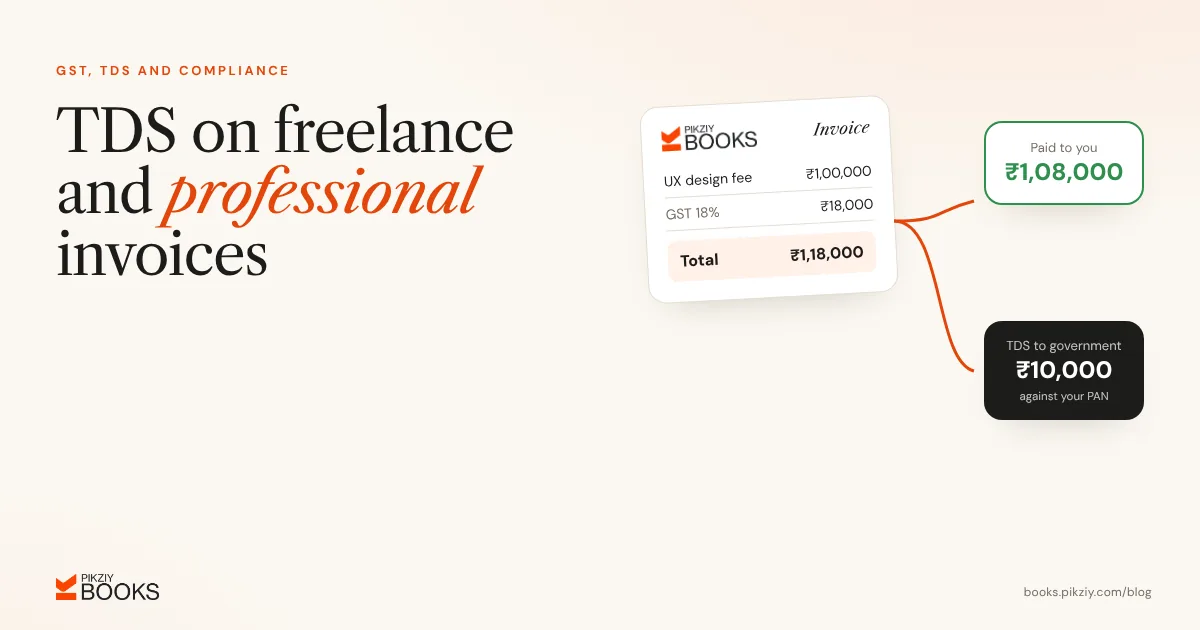
Is GST calculated before or after TDS?
Next step
Write the two formulas on a sticky note, or let software do the arithmetic. PikZiy Books calculates GST line by line, handles discounts and rounding the same way every time, and shows the CGST, SGST or IGST split on each invoice.