How to Track Profitability for Creative Projects
Track project profitability for creative work: budget hours, cost your team's time, add direct expenses and compare with the fee. Worked example included.
Quick answer
Project profitability is the fee minus the cost of the people who worked on it and any direct expenses. To track it, set an hours budget before you start, give every team member an internal cost per hour, log time and expenses against the project, and compare the result with the fee when the project closes.
Why revenue alone misleads
Two ₹2,00,000 projects can have very different results. One takes 60 hours; the other takes 160 hours because of unclear feedback. Without tracking, both look equally good in your sales figures.
Step 1: work out a cost per hour for each person
Cost per hour = (monthly salary + benefits + share of overheads) ÷ productive hours per month.
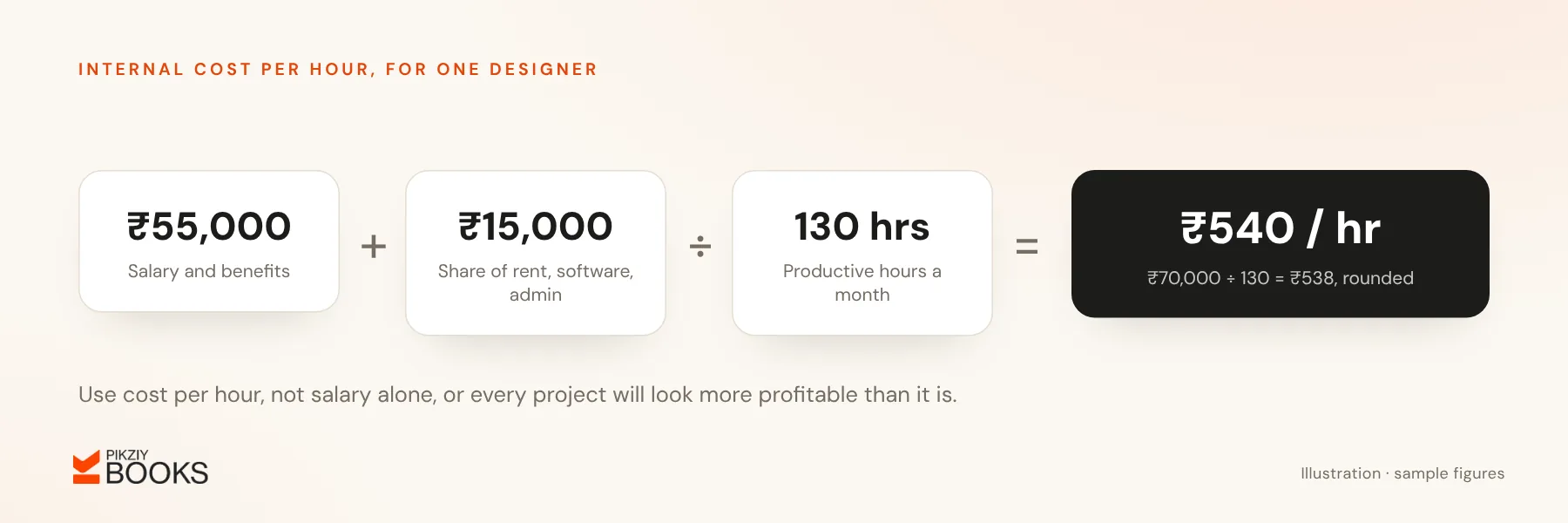
- Salary and benefits: ₹55,000 a month.
- Share of rent, software and admin: ₹15,000.
- Productive hours: 130 a month.
- Cost per hour: ₹538, rounded to ₹540.
Step 2: budget hours by phase
For a packaging design project:
| Phase | Hours |
|---|---|
| Discovery and research | 8 |
| Concepts | 24 |
| Revisions | 12 |
| Print-ready artwork and dielines | 10 |
| Project management | 6 |
| Total | 60 |
Step 3: track actual time and expenses
Log hours daily against the project and the phase. Record direct costs as they happen: stock images, fonts, print proofs, courier and freelancers.
Step 4: compare at close
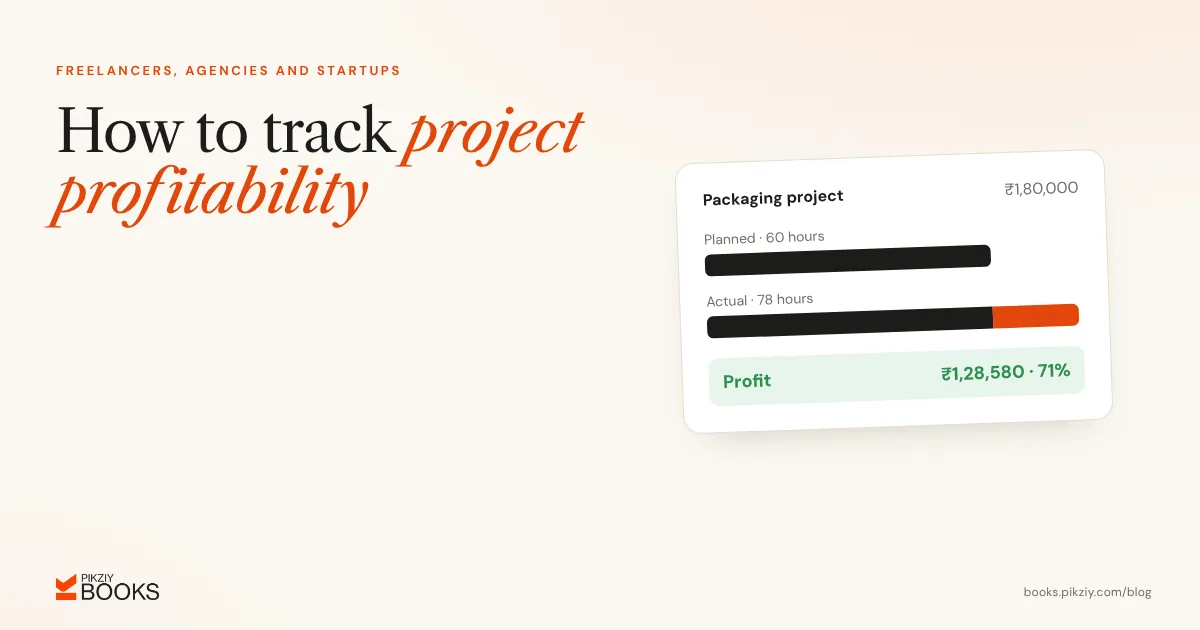
Worked example for a ₹1,80,000 packaging project, excluding GST:
| Amount | |
|---|---|
| Fee | ₹1,80,000 |
| Team cost: 78 actual hours × ₹540 (60 were planned) | − ₹42,120 |
| Direct expenses: print proofs ₹6,000, stock ₹2,500, courier ₹800 | − ₹9,300 |
| Project profit | ₹1,28,580 (71%) |
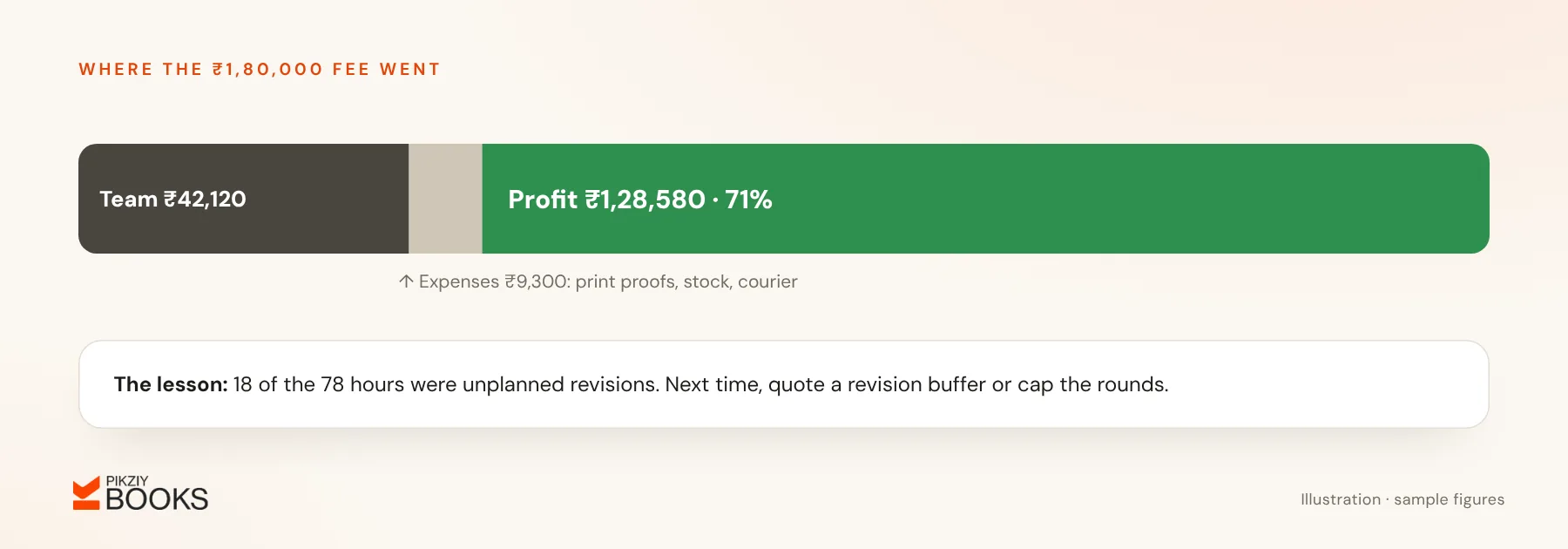
The margin is still healthy, but 18 extra hours went into revisions. At the next quote, the studio either adds a revision buffer or caps revision rounds more tightly; see how to write a graphic design quotation.
What the numbers tell you
- Which clients cause overruns.
- Which phases you underestimate.
- Which services are most profitable.
- Whether your rates need to rise; see how much freelancers should charge.
Common mistakes
- Using salary alone, without overheads, in the cost per hour.
- Not logging time for small tasks and calls.
- Forgetting freelancer and print costs.
- Reviewing only at the end of the year.
Frequently asked questions
What is a good margin for a creative agency project?
Should GST be included in project revenue?
How often should I review project profitability?
Is project profit the same as the business's net profit?
Next step
Work out a cost per hour for each person on your team, and budget hours on your next project before you start. PikZiy Books records the fee and the direct expenses against each project, so you can see its real profit when it closes.