What Is Input Tax Credit (ITC) in GST? Eligibility, Blocked Credits and Examples
Input tax credit lets you reduce GST payable by the tax paid on business purchases. See eligibility conditions, blocked credits, time limits and an example.
Quick answer
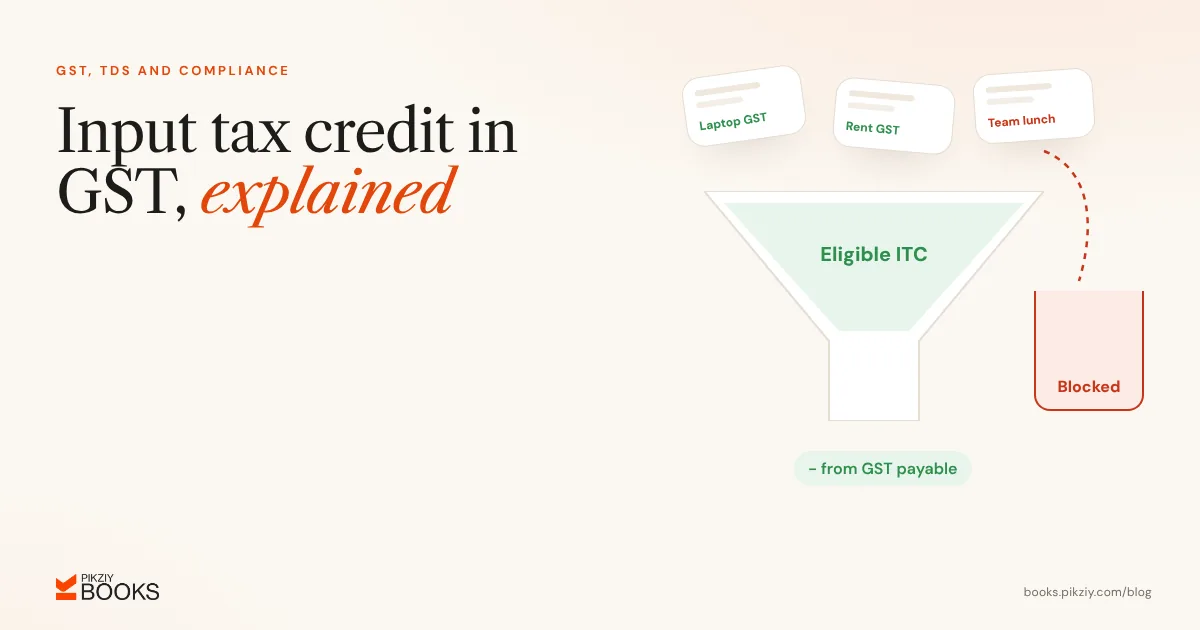
Input tax credit (ITC) is the GST you paid on purchases for your business, which you can subtract from the GST you charge on sales. You can claim it only if you have a valid tax invoice, you have received the goods or services, the invoice appears in your GSTR-2B, the supplier has paid the tax and you have filed your return. Some purchases, such as most cars and food for staff, are blocked even when used for business.
How ITC works
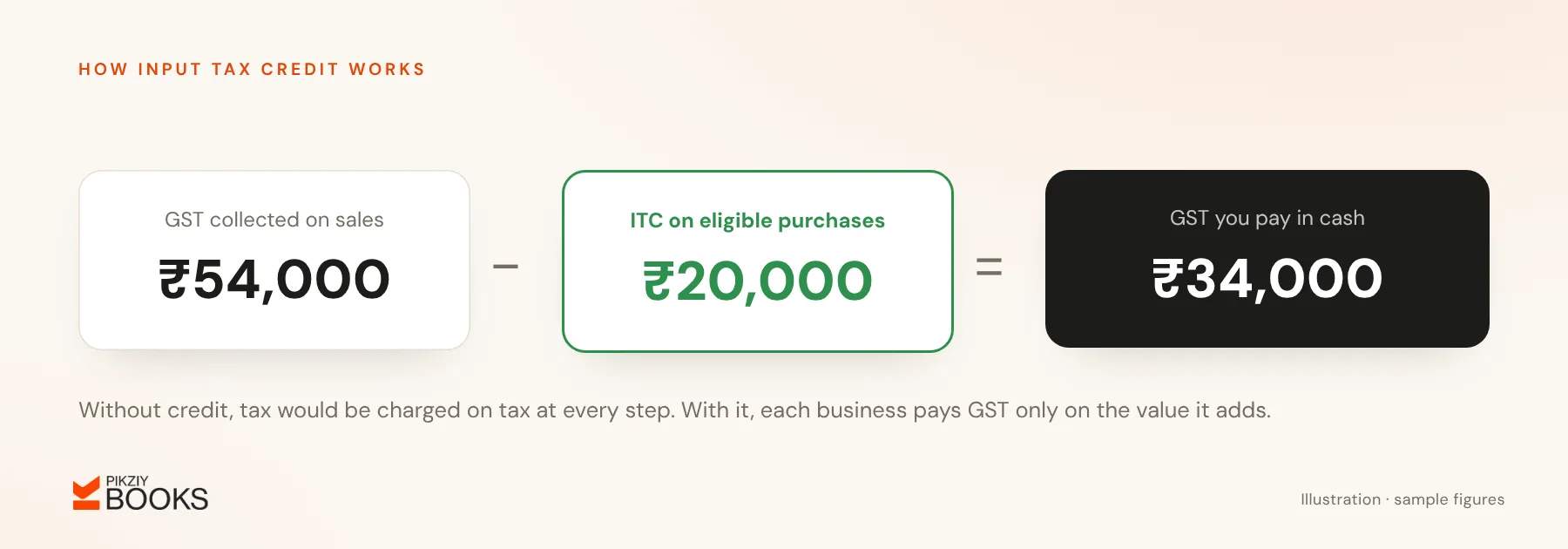
If you charge ₹54,000 GST on your sales and paid ₹20,000 GST on eligible purchases, you pay ₹34,000 in cash. Without ITC, tax would be charged on tax at every step of the supply chain.
The conditions to claim ITC
- You are GST-registered and the purchase is for your business.
- You hold a tax invoice or debit note with the required details, showing your GSTIN.
- You have received the goods or services (including delivery to someone else on your instructions).
- The invoice appears in your GSTR-2B, which means your supplier has reported it in their GSTR-1.
- The supplier has actually paid the tax to the government.
- You have filed your GSTR-3B.
Since late 2025, the Invoice Management System (IMS) lets you accept, reject or keep pending each supplier invoice before your GSTR-2B is generated. Only what flows into GSTR-2B can be claimed in your GSTR-3B.
Time limit
You must claim ITC for a financial year by 30 November of the following year, or the date you file your annual return, whichever is earlier. Credit you miss after that is lost. For FY 2025-26, that means by 30 November 2026 at the latest.
Blocked credits
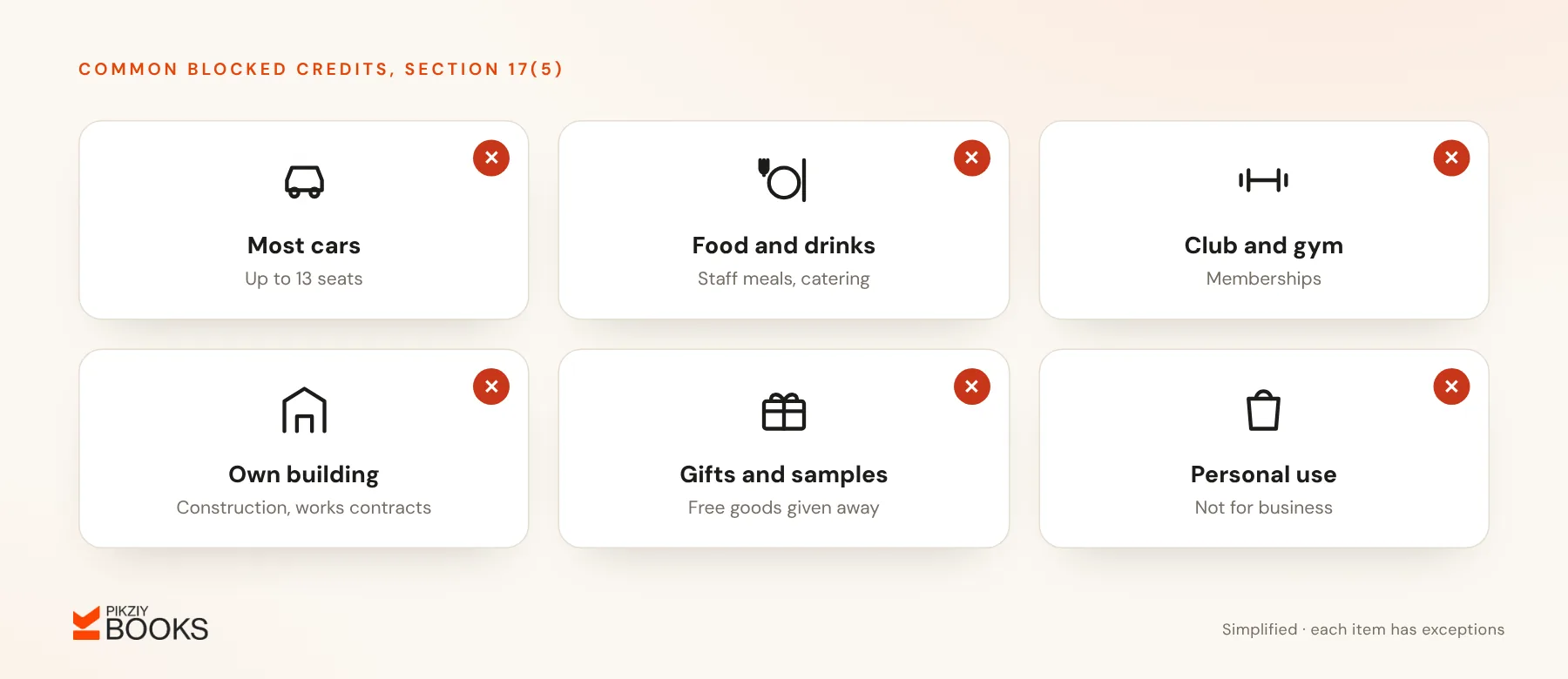
Section 17(5) of the CGST Act blocks credit on certain purchases even when they are for the business. The main ones are:
- Motor vehicles for carrying up to 13 people, unless used for further supply, passenger transport, driving training or certain other permitted uses.
- Food and beverages, outdoor catering, beauty treatment, health services and cosmetic surgery, unless you supply the same kind of service or the law requires you to provide it to employees.
- Club, health and fitness centre memberships.
- Travel benefits for employees on holiday.
- Works contracts and goods or services for building immovable property (other than plant and machinery) for your own use.
- Goods lost, stolen, destroyed, written off, or given away as gifts or free samples.
- Goods or services for personal use.
- Tax paid under the composition scheme.
Worked example
A Gurugram digital agency's purchases in December:
| Purchase | Value | GST | Credit? |
|---|---|---|---|
| New laptops | ₹2,00,000 | ₹36,000 | Eligible |
| Coworking rent | ₹80,000 | ₹14,400 | Eligible |
| Software subscriptions from an Indian reseller | ₹30,000 | ₹5,400 | Eligible |
| Team lunch at a restaurant | ₹12,000 | ₹600 | Blocked |
| Car for the founder | ₹9,00,000 | GST paid | Blocked |
Eligible ITC = ₹36,000 + ₹14,400 + ₹5,400 = ₹55,800, provided all three invoices appear in GSTR-2B.
Reversals to remember
- Unpaid suppliers: if you do not pay a supplier within 180 days of the invoice date, reverse the credit with interest. You can reclaim it once you pay.
- Mixed use: if a purchase is used partly for exempt supplies or personal use, reverse the proportionate credit.
- Credit notes: when a supplier issues you a credit note, reduce the credit you claimed.
Common mistakes
- Claiming ITC from your purchase register without checking GSTR-2B.
- Claiming blocked credits such as staff meals.
- Missing the 180-day payment rule.
- Losing credit by claiming it after the 30 November deadline.
More in GST mistakes that disrupt your accounts.
Frequently asked questions
Can I claim ITC on an invoice in my personal name?
Can a freelancer who is not registered claim ITC?
What happens if my supplier never files GSTR-1?
Is ITC available on imported services?
Next step
Match your purchase invoices with GSTR-2B every month, before you file. PikZiy Books lets you record purchases with their GST and tag blocked items, so the credit you claim is the credit you are entitled to.