How to Set Up Your First Business Finance System
Set up a simple business finance system: bank accounts, contacts, invoices, expenses, records and a monthly close, step by step for new Indian businesses.
Quick answer
A first business finance system needs five parts: a separate business bank account, a list of clients and suppliers, a consistent way to issue invoices, a habit of recording expenses with receipts, and a monthly close where you reconcile the bank and review profit, cash and dues. Add GST and TDS routines if they apply to you.
1. Bank accounts
- One current account for business receipts and payments.
- An optional second account for tax set-aside.
- A business UPI ID linked to the current account.
2. Contacts
Create a single list of clients and suppliers with legal names, GSTINs, addresses, payment terms and contact emails.
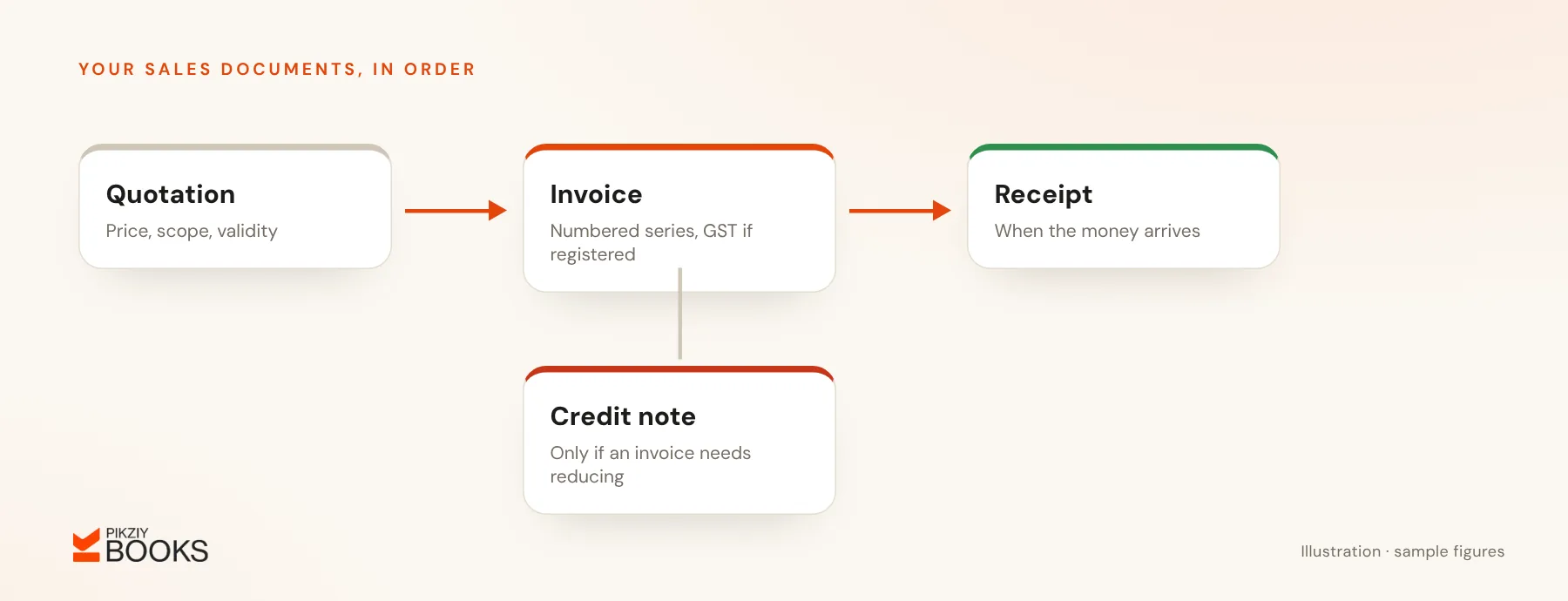
3. Sales documents
Decide your formats once:
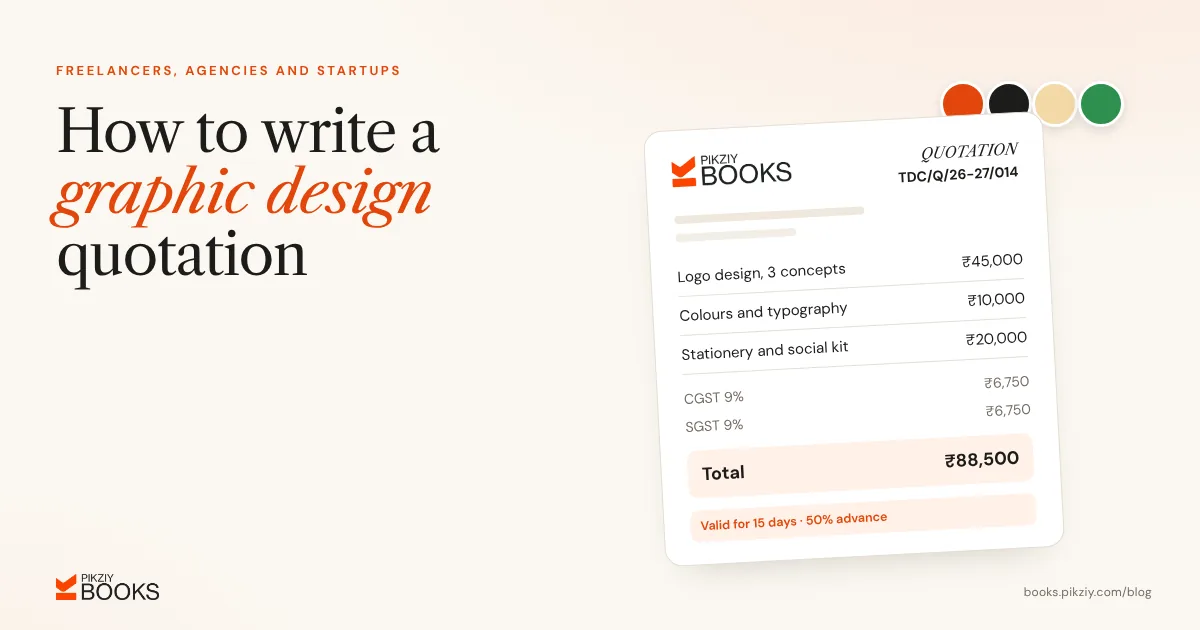
- A quotation template; see quotation vs estimate vs invoice.
- An invoice template with a numbering series; see invoice numbering in India.
- A credit note format.
- A receipt format; see invoice vs receipt.
4. Expenses and purchases
- Pay business costs from the business account.
- Save every bill, as a photo or PDF, the same day.
- Categorise expenses consistently: rent, software, travel, salaries, marketing.
- Keep supplier GST invoices to claim input tax credit if you are registered.
5. Records and storage
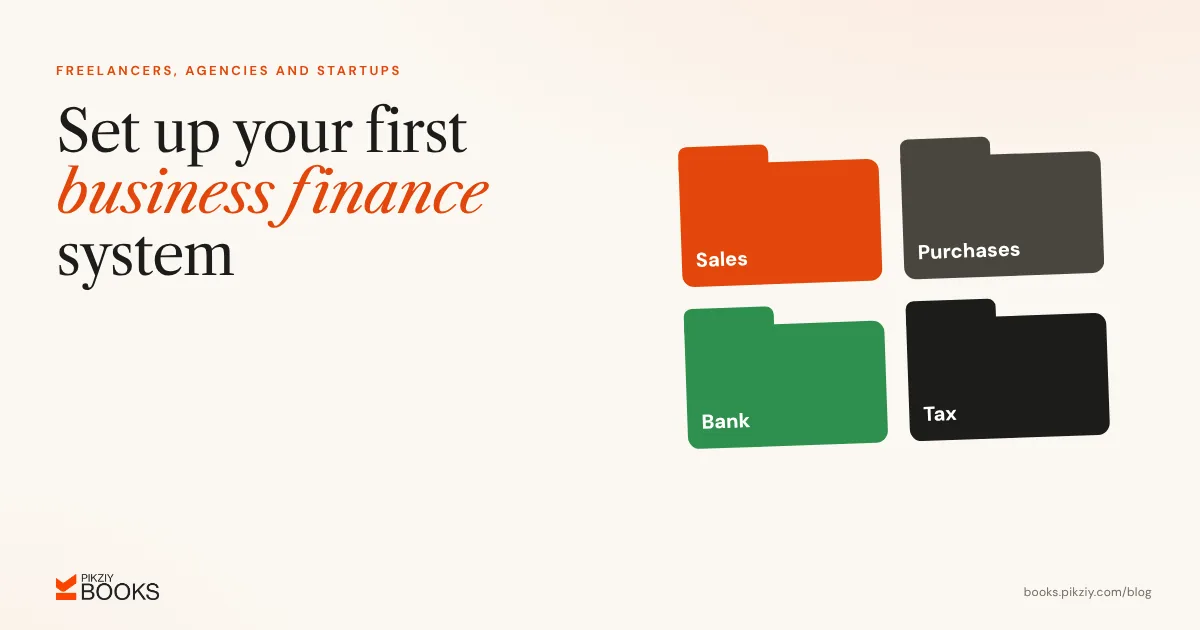
Store invoices, bills, bank statements and returns in folders by financial year and month, and back them up. Under GST, records generally need to be kept for 72 months from the due date of the annual return for that year.
6. The monthly close
By the 10th of each month:
- Record all sales and purchase documents.
- Reconcile the bank statement with your records.
- Review what customers owe you and what you owe suppliers.
- Prepare GST returns if registered (see GSTR-1), and deposit any TDS you deducted.
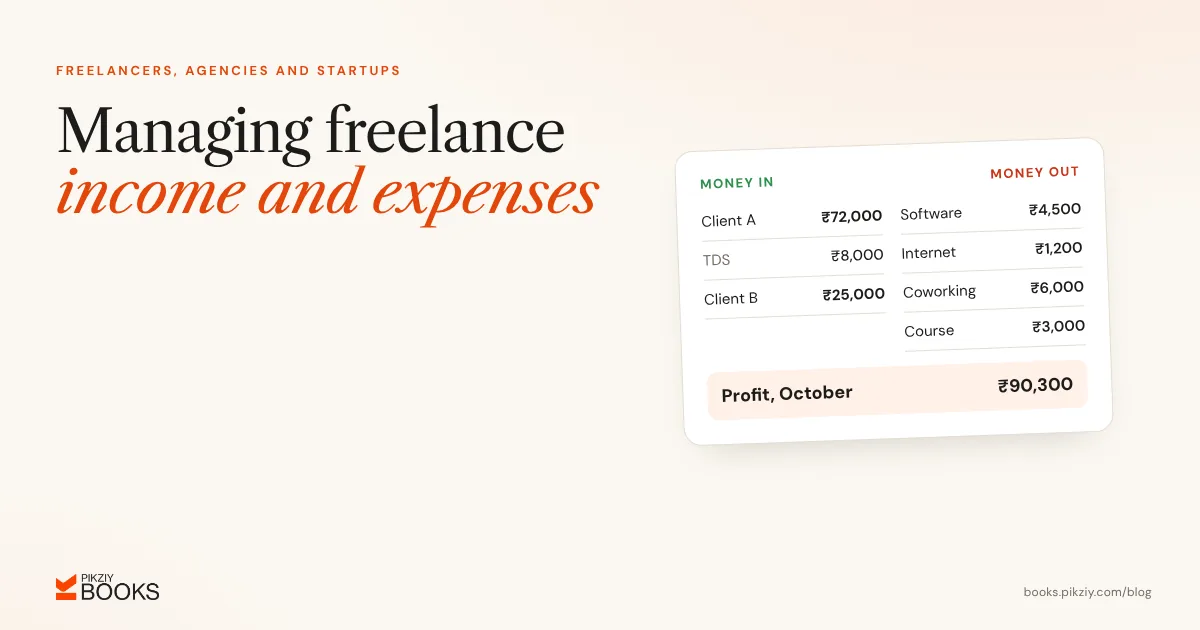
- Look at a simple profit and loss and your cash balance.
Worked example
Two founders start a D2C candle brand in Pune. In their first week they set up:
- A current account and a separate tax account.
- A spreadsheet of 12 suppliers and 3 B2B stockists.
- The invoice series CND/26-27/0001.
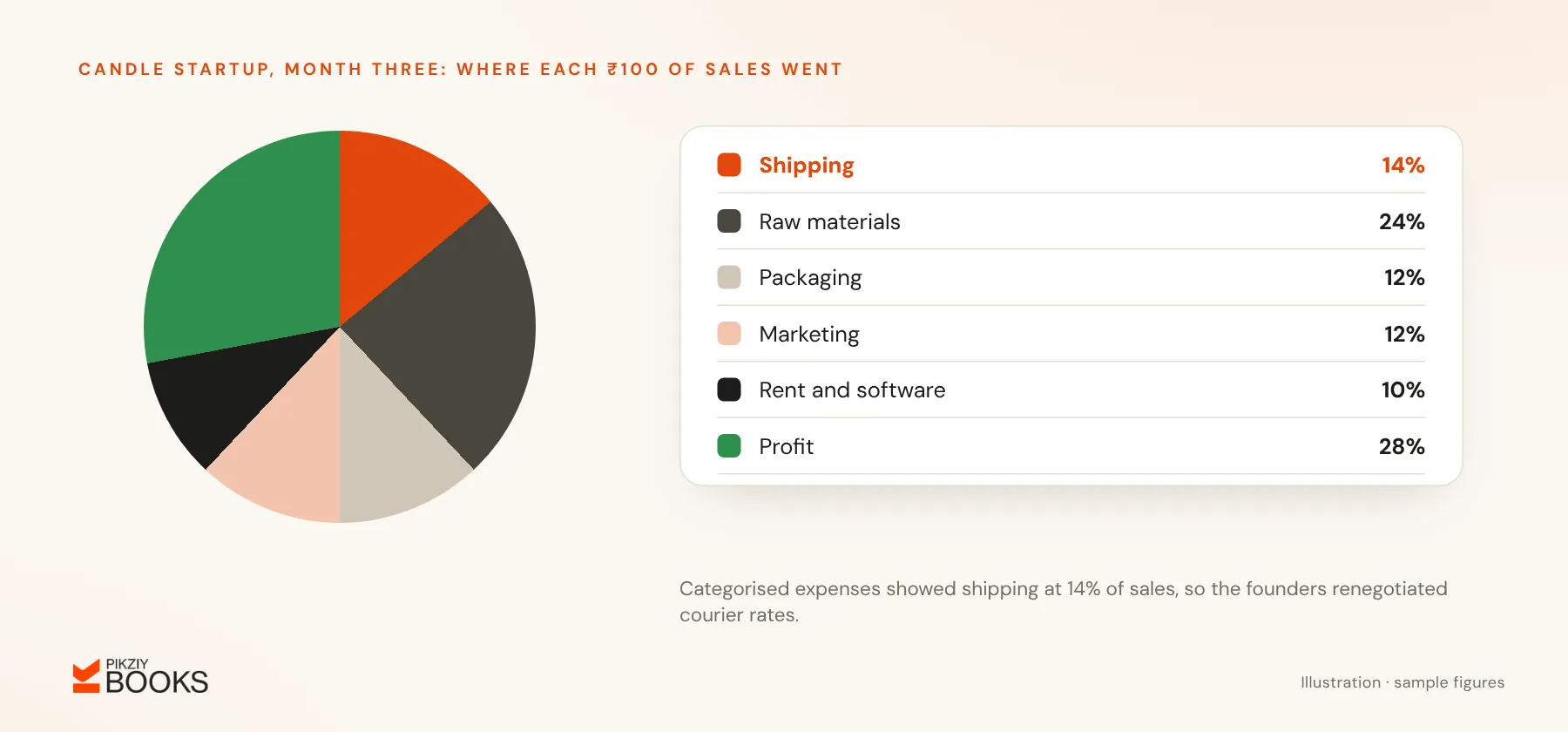
- Expense categories: raw materials, packaging, shipping, marketing, software, rent.
- A monthly close on the 7th, with their CA reviewing GST on the 15th.
By month three they can see that shipping takes 14% of sales, and renegotiate their courier rates.
When to move from spreadsheets to software
- More than 20 to 30 invoices a month.
- Several people need access.
- You need GST-ready reports and payment reminders.
- You want history and an audit trail in one place.
Common mistakes
- Using personal accounts “for now”.
- No invoice numbering series.
- Receipts kept only in email.
- Skipping the monthly close.
Frequently asked questions
Do I need an accountant from day one?
Which reports should I look at every month?
How long should I keep business records?
Should freelancers set up the same system?
Next step
Set up the five parts this week, and put your first monthly close in the calendar. PikZiy Books gives you quotations, invoices, receipts, expenses and a monthly profit view from your first sale, with your CA able to log in and review.