How to Reconcile Bank Statements with Business Records
Bank reconciliation, step by step: match your statement with your books, find missing entries, explain timing differences and fix errors. Example included.
Quick answer
Bank reconciliation means matching every transaction in your bank statement with your business records for the same period, then explaining any differences. Differences usually come from timing (cheques not yet cleared), items you have not recorded (bank charges, interest) or mistakes. Do it every month.
Why reconcile
- It catches missed income and expenses.
- It spots errors and duplicate entries.
- It detects fraud or unauthorised debits early.
- It makes your GST, TDS and year-end accounts accurate.
Step by step
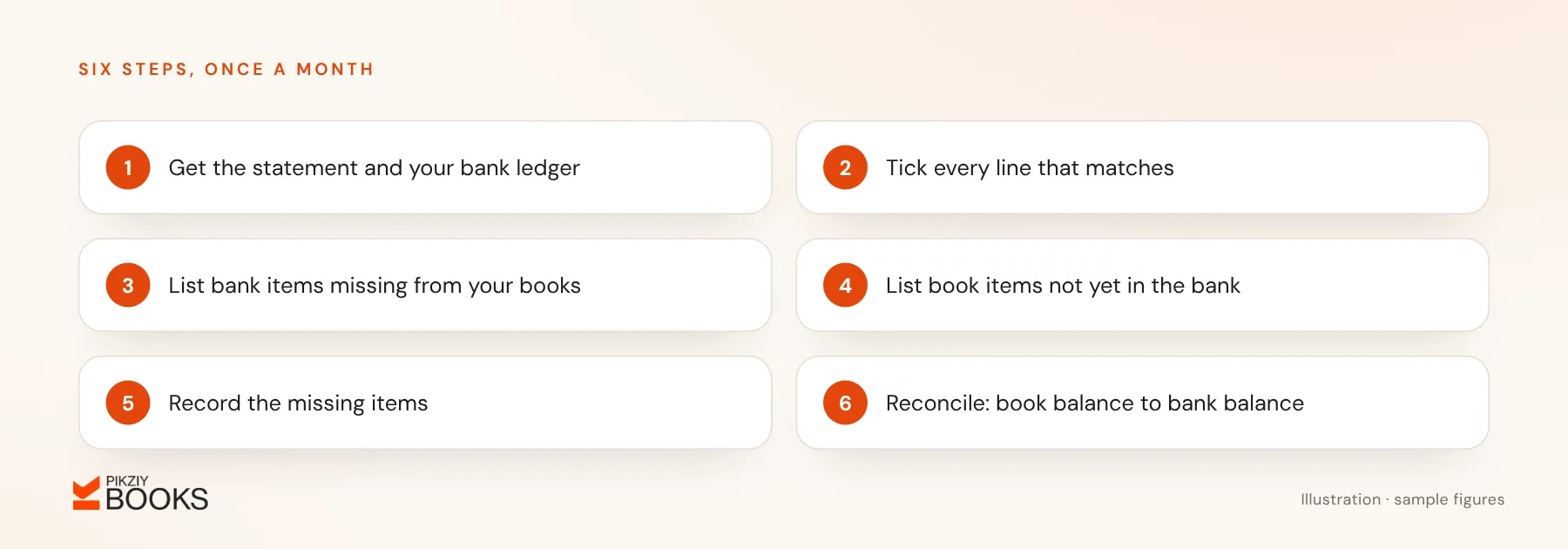
- Get the bank statement for the month and your bank ledger (or cash book).
- Tick each statement line that matches an entry in your records.
- List entries in the bank statement but not in your books: charges, interest, direct receipts.
- List entries in your books but not yet in the bank: cheques issued but not presented, deposits in transit.
- Record the missing items in your books.
- Prepare the reconciliation: start from the book balance, adjust for timing items, and check you arrive at the bank balance.
Worked example
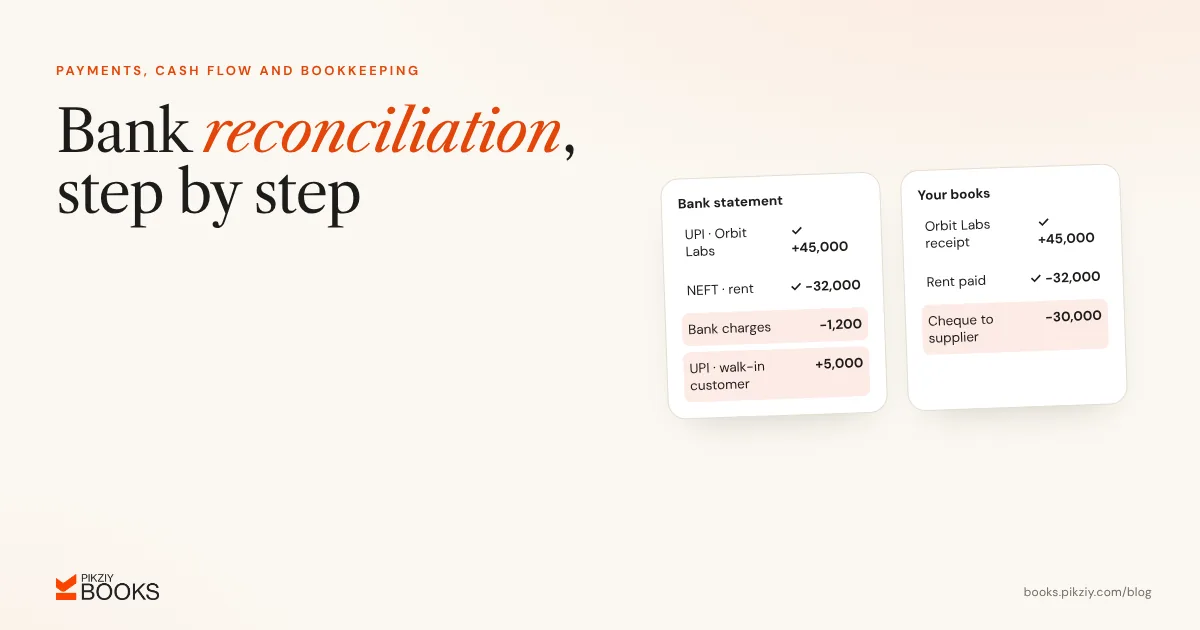
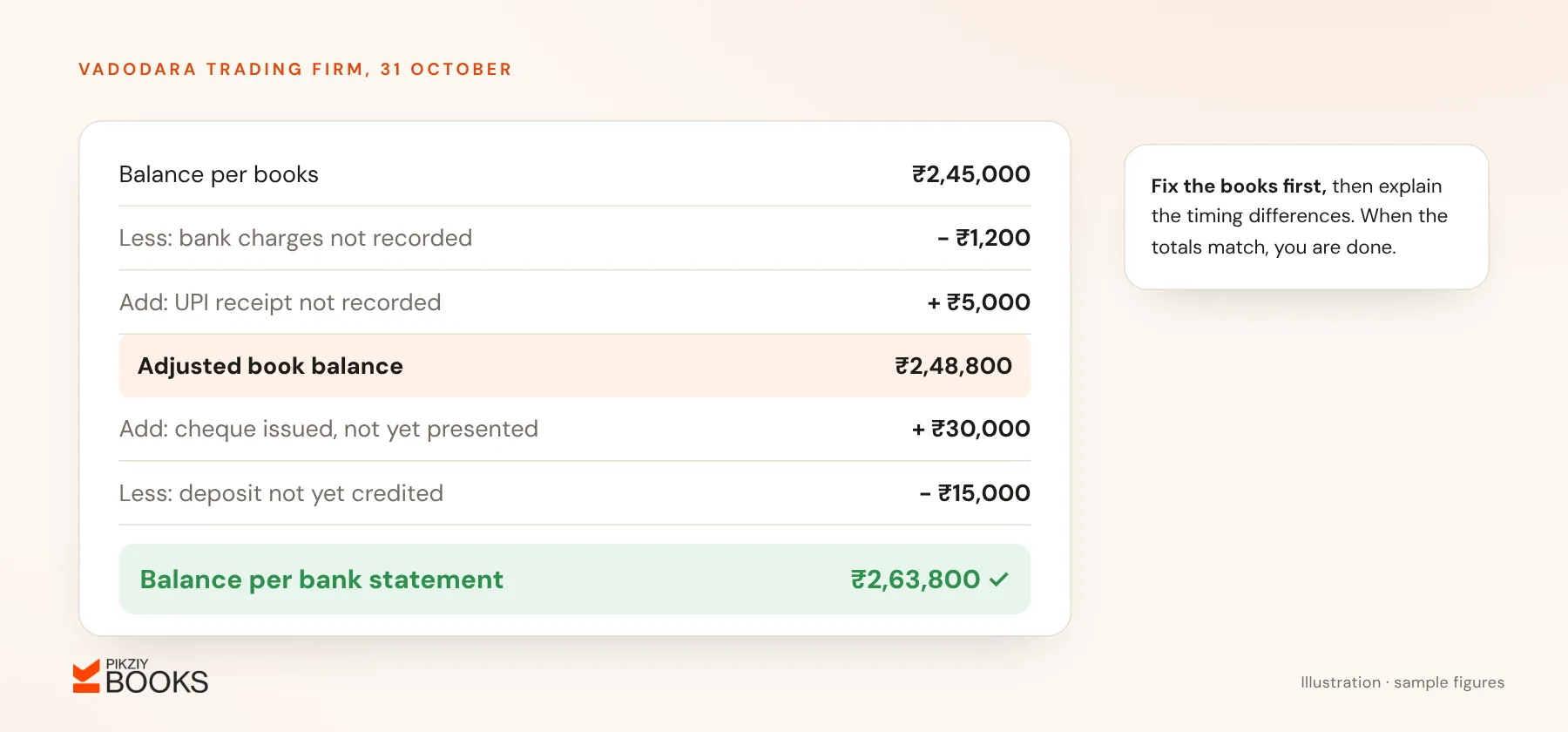
A Vadodara trading firm, on 31 October. The balance per books is ₹2,45,000; the bank statement says ₹2,63,800. The differences found:
- A ₹30,000 cheque issued to a supplier, not yet presented.
- A ₹15,000 customer cheque deposited on 31 October, not yet credited.
- Bank charges of ₹1,200, not recorded in the books.
- A ₹5,000 customer UPI receipt, not recorded in the books.
Update the books first: ₹2,45,000 − ₹1,200 + ₹5,000 = ₹2,48,800. Then reconcile the timing items:
| Amount | |
|---|---|
| Adjusted book balance | ₹2,48,800 |
| Add: cheque issued, not yet presented | + ₹30,000 |
| Less: deposit not yet credited | − ₹15,000 |
| Balance per bank statement | ₹2,63,800 ✓ |
Common causes of differences
- Bank charges, GST on bank charges and SMS fees.
- Interest credited.
- Direct UPI or NEFT receipts not recorded.
- Duplicate entries in the books.
- Amounts typed wrongly.
Tips
- Reconcile monthly, not once a year.
- Ask customers to mention invoice numbers in UPI or NEFT remarks, so receipts are easy to match.
- Keep one bank account for the business; see how to set up your first business finance system.
- Investigate unexplained items straight away.
Frequently asked questions
How often should I reconcile?
What if the difference will not go away?
Should GST on bank charges be recorded?
Is reconciliation needed if I use UPI for everything?
Next step
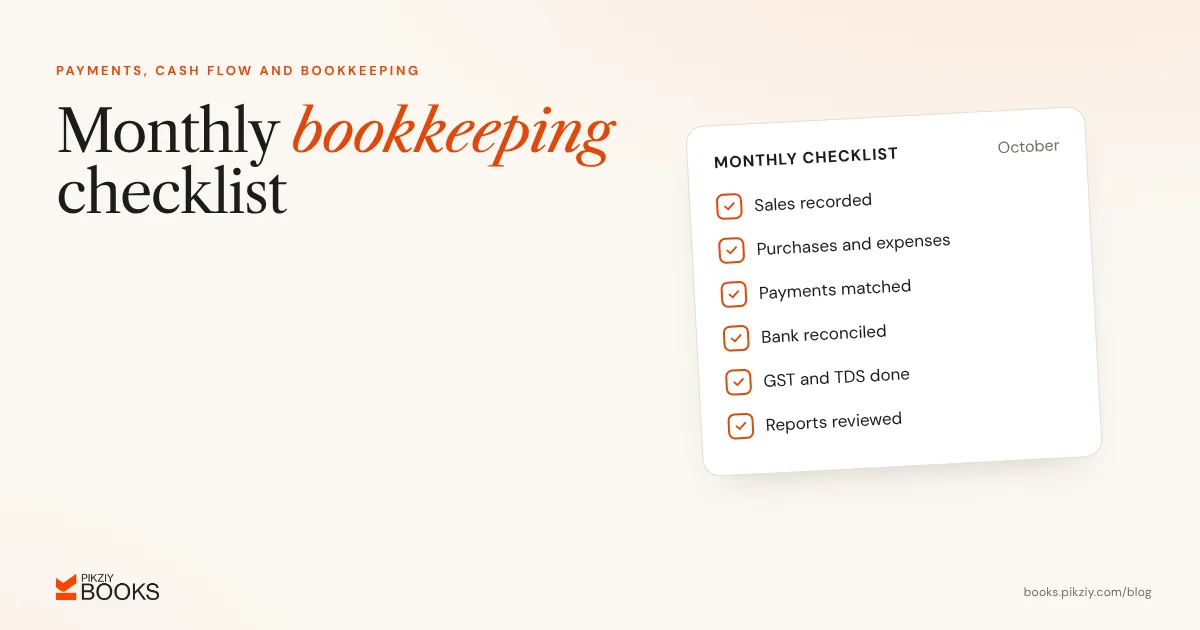
Reconcile last month's statement this week, using the six steps above. Bank reconciliation is part of the monthly routine in our monthly bookkeeping checklist, and PikZiy Books records every receipt and payment against invoices and bills so there is less to match.