How to Create a Profit and Loss Statement for a Small Business
Build a simple profit and loss statement step by step: revenue, direct costs, gross profit, operating expenses, net profit and margins, with a sample.
Quick answer
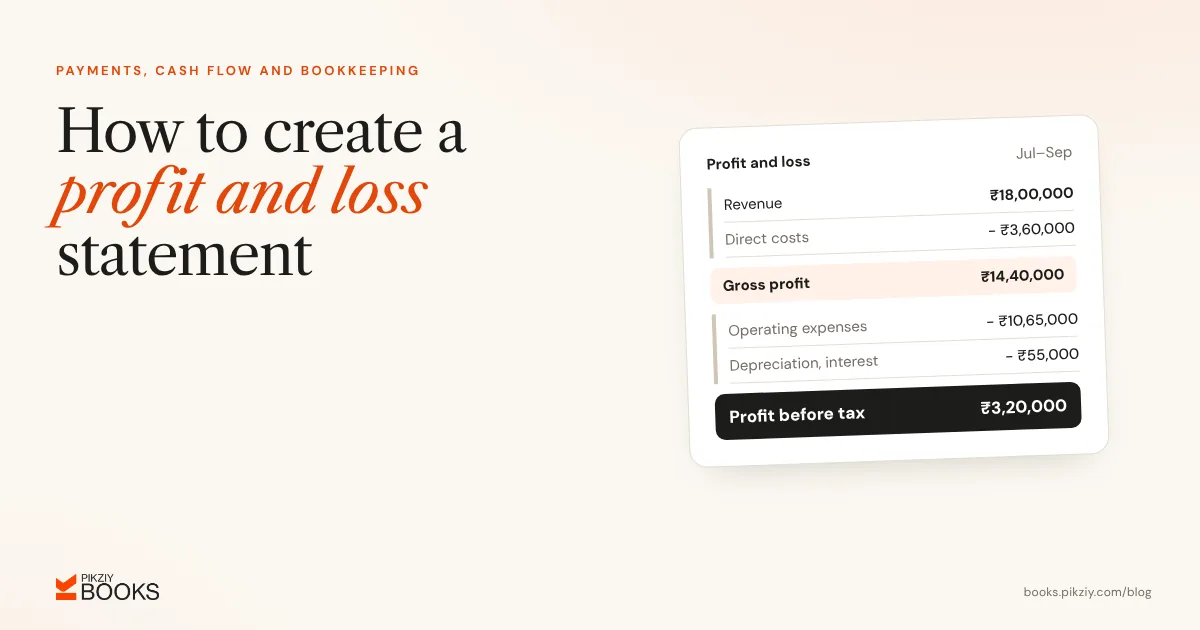
A profit and loss statement (P&L) shows your income and expenses for a period. Start with revenue, subtract direct costs to get gross profit, subtract operating expenses to get operating profit, then account for depreciation, interest and tax to reach net profit. Use figures excluding GST.
The structure
- Revenue: sales of goods or services, net of returns and discounts.
- Cost of goods sold, or direct costs: materials, production, freelancers working directly on projects.
- Gross profit: revenue minus direct costs.
- Operating expenses: salaries, rent, software, marketing, utilities.
- Operating profit: gross profit minus operating expenses.
- Depreciation and interest.
- Profit before tax.
- Tax.
- Net profit.
Sample P&L for a quarter
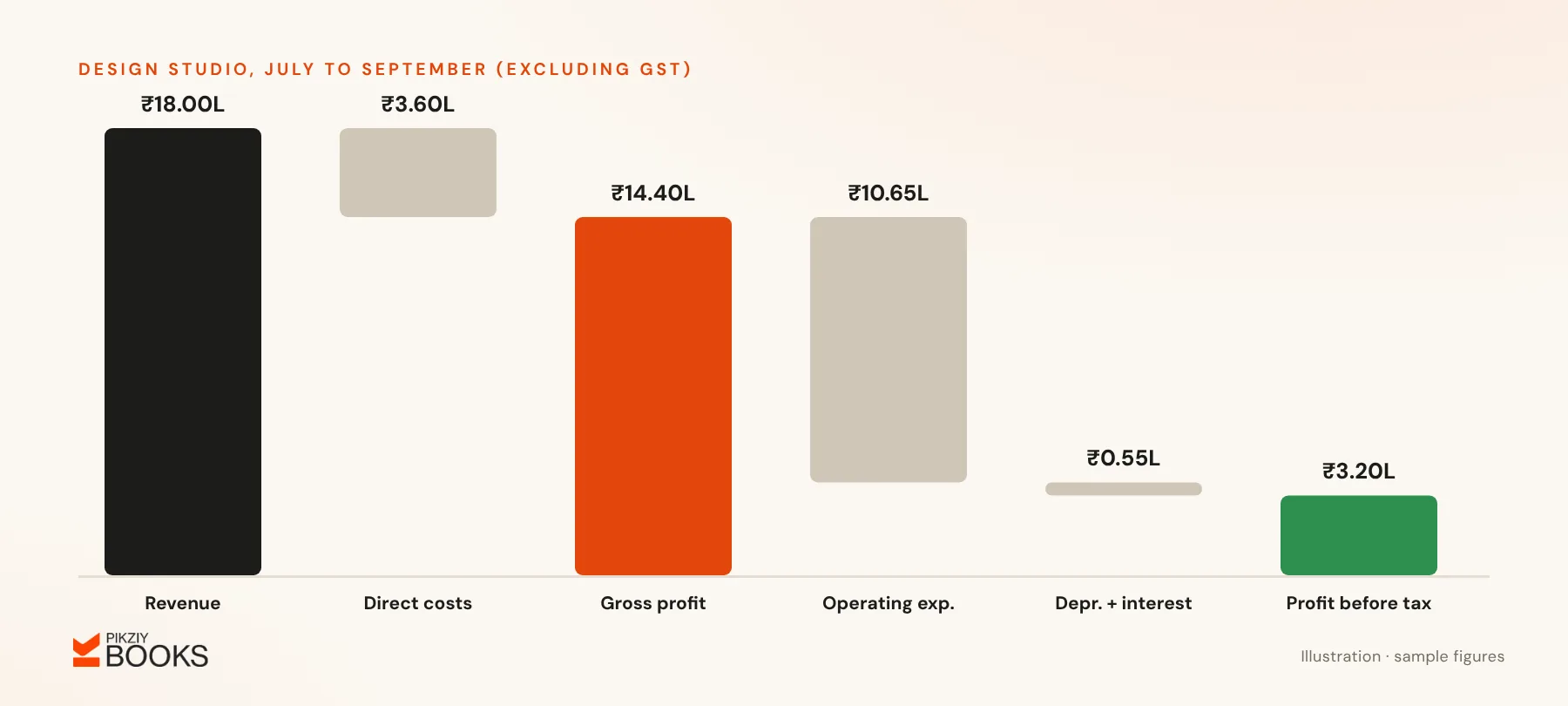
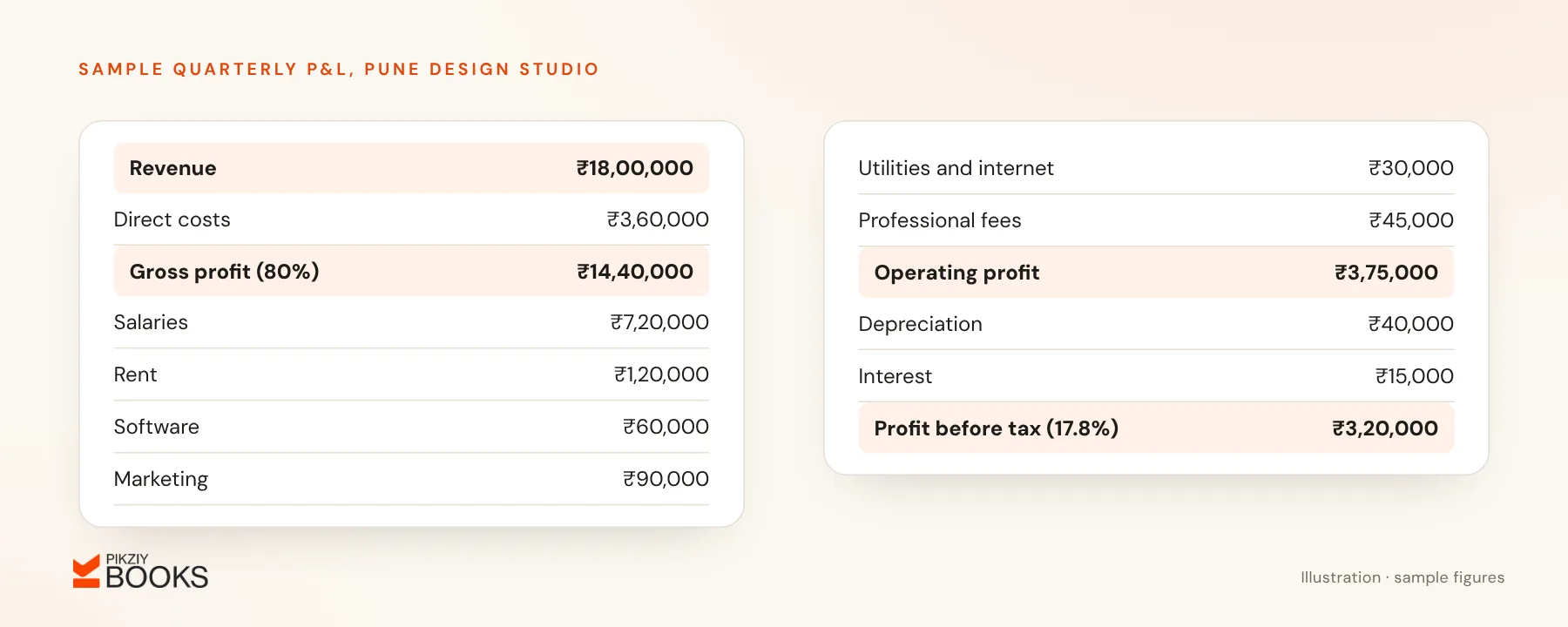
A Pune design studio, July to September, amounts excluding GST:
| Amount | |
|---|---|
| Revenue | ₹18,00,000 |
| Direct costs (freelancers, printing, stock assets) | − ₹3,60,000 |
| Gross profit (80%) | ₹14,40,000 |
| Salaries | − ₹7,20,000 |
| Rent | − ₹1,20,000 |
| Software and subscriptions | − ₹60,000 |
| Marketing | − ₹90,000 |
| Utilities and internet | − ₹30,000 |
| Professional fees | − ₹45,000 |
| Operating profit | ₹3,75,000 |
| Depreciation on equipment | − ₹40,000 |
| Interest on loan | − ₹15,000 |
| Profit before tax (17.8% of revenue) | ₹3,20,000 |
Tax depends on the business structure and the regime, so it is shown separately once calculated.
Steps to prepare it
- Choose the period: a month, a quarter or a year.
- Total all invoices issued in the period, excluding GST, as revenue.
- Classify each expense as direct or operating; see how to categorise business expenses.
- Add depreciation for assets you have bought.
- Total everything and calculate the margins.
- Compare with the previous period.
Reading the P&L
- Falling gross margin: rising direct costs, or underpricing.
- Operating expenses rising faster than revenue: overheads growing too fast.
- Profit but little cash: check your receivables; see cash flow vs profit.
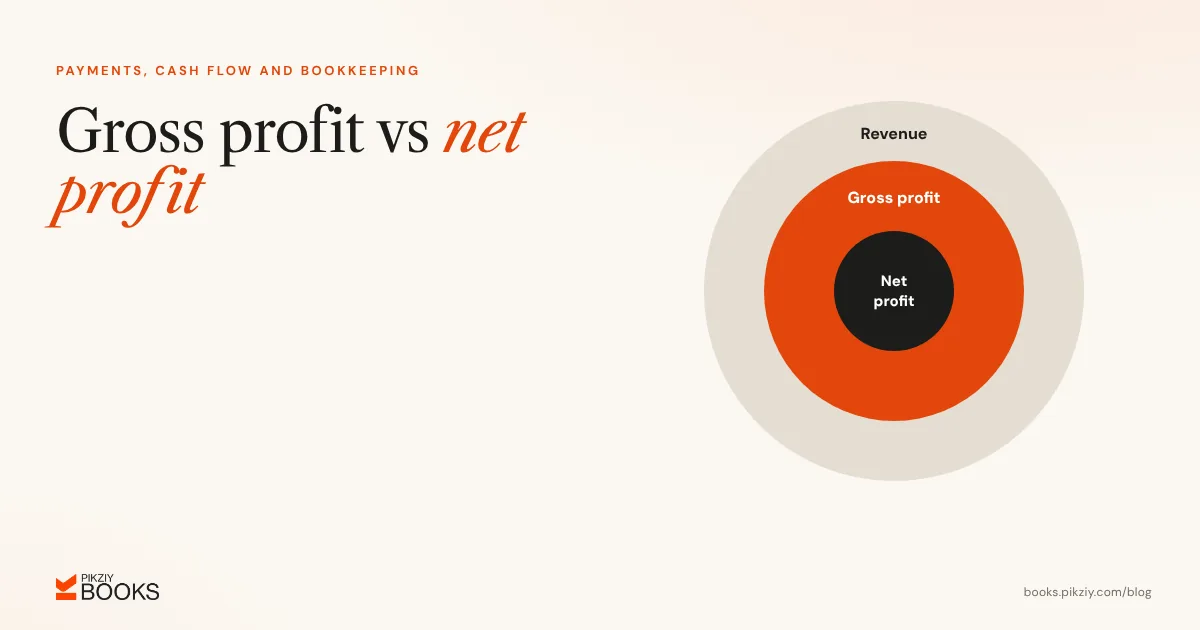
For the margin formulas, see gross profit vs net profit.
Common mistakes
- Including GST in revenue.
- Expensing a laptop fully in the month you buy it.
- Mixing the owner's drawings with business expenses.
- Recording income when paid in one month and when invoiced in another.
Frequently asked questions
Is a P&L the same as an income statement?
How often should I prepare one?
Does a sole proprietor need a P&L?
What is the difference between a P&L and a balance sheet?
Next step
Prepare a P&L for last month using the nine-line structure above. PikZiy Books builds it from your invoices and expenses as you go, excluding GST, so your monthly profit is always one click away.