10 Financial Mistakes New Agencies Make in Their First Year
The agency financial mistakes that hurt new agencies most: underpricing, no advances, mixed money, untracked costs and receivables, and how to fix each.
Quick answer
The agency financial mistakes that cause the most trouble in year one are underpricing, starting work without advances, mixing personal and business money, ignoring overheads, losing track of expenses and receivables, hiring before revenue is steady, keeping no cash reserve, giving away scope and skipping monthly reports. Each one is fixable with simple habits from day one.
1. Underpricing to win the first clients
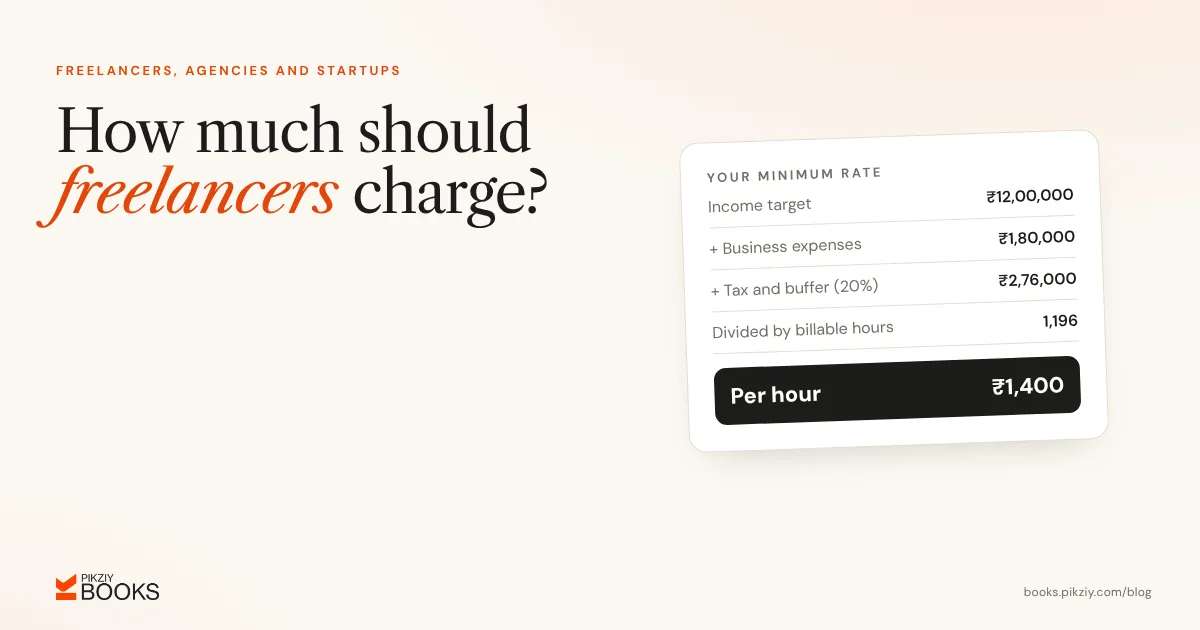
Low launch prices become the anchor for every renewal. Price from your costs and the value you deliver, then offer a limited introductory discount with an end date if you need one. See how much freelancers should charge; the same method works for agencies.
2. No advance payments
Without advances, you are funding the client's project. Ask for 30% to 50% on signing for projects, and bill retainers in advance.
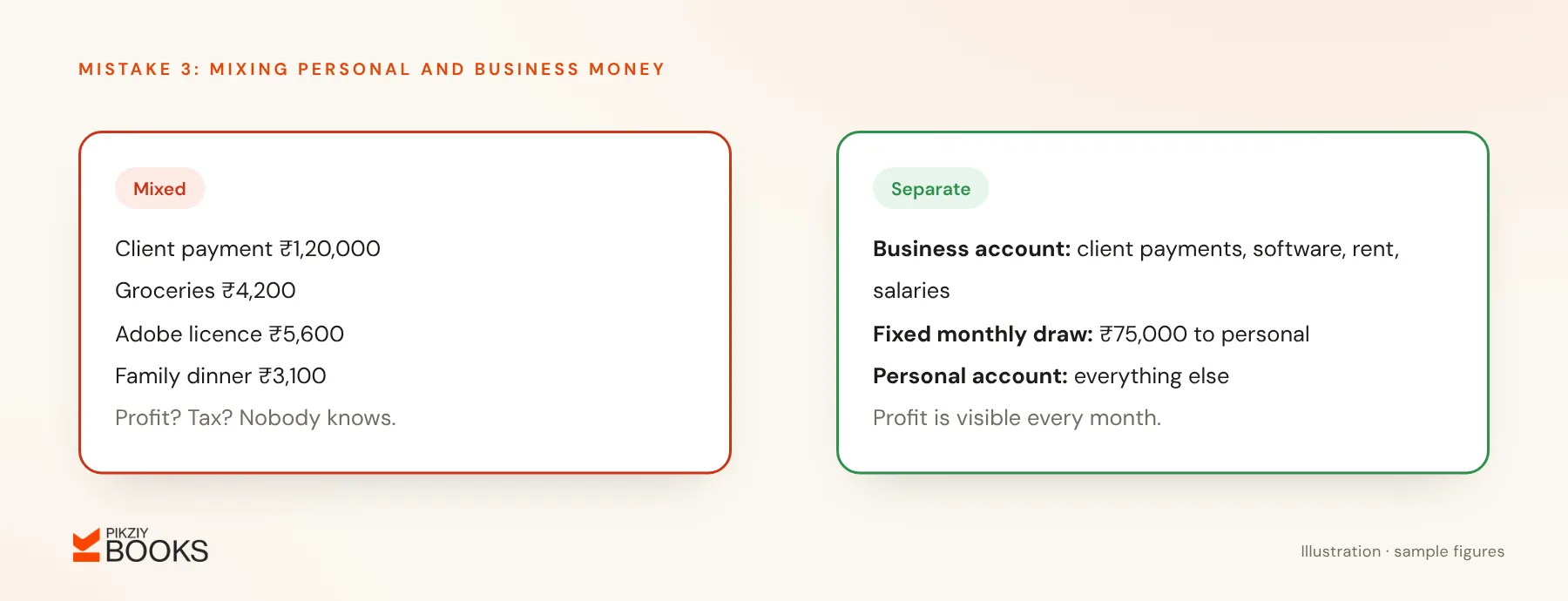
3. Mixing personal and business money
Use a separate current account for the agency, and pay yourself a fixed monthly draw.
4. Ignoring overheads in pricing
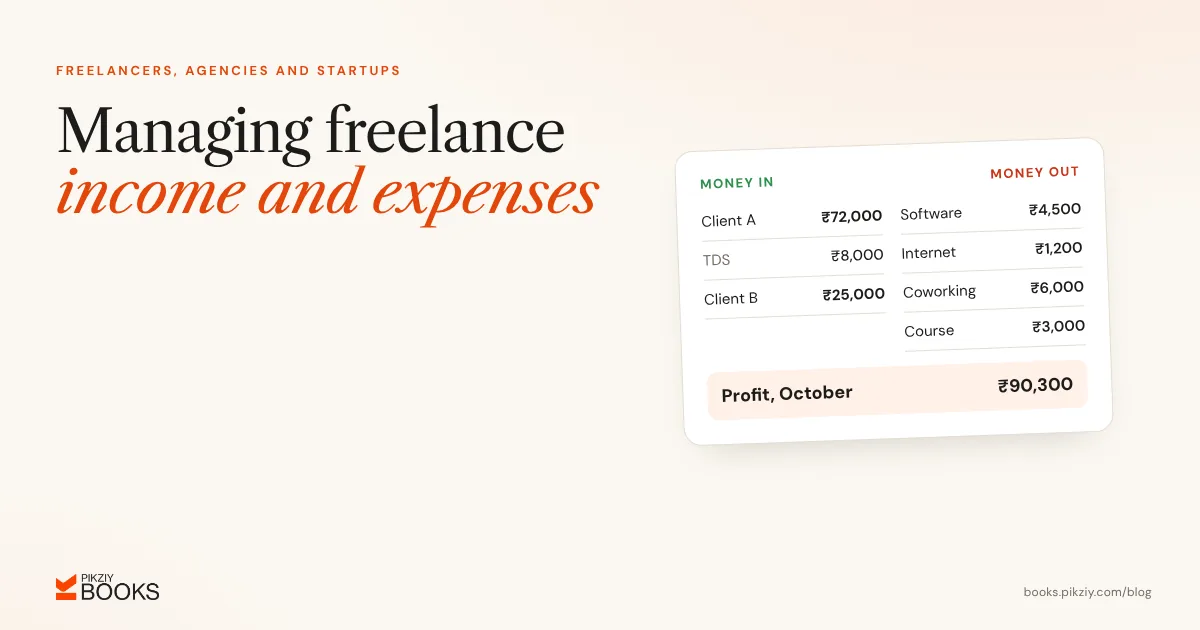
Rent, software, laptops, accountant fees and your own time all have to be covered by project fees. Build them into a cost per hour; see project profitability.
5. Not tracking expenses
Untracked expenses mean missed input tax credit if you are GST-registered, overstated profit and a higher tax bill.
6. Letting receivables grow
Fifteen invoices at 30 days overdue can starve an agency of cash even when the year looks profitable on paper. Review open invoices weekly; see how to track payments from many clients.
7. Hiring ahead of steady revenue
Hire when retainers or a reliable pipeline cover at least the first few months of the new salary.
8. No cash reserve
Aim to build a reserve of two to three months of fixed costs.
9. Giving away scope
Small extras add up. Log every out-of-scope request and quote it, as you would for a website change request.
10. No monthly numbers
Without a monthly profit and loss, cash position and receivables list, you learn about problems too late.
Worked example
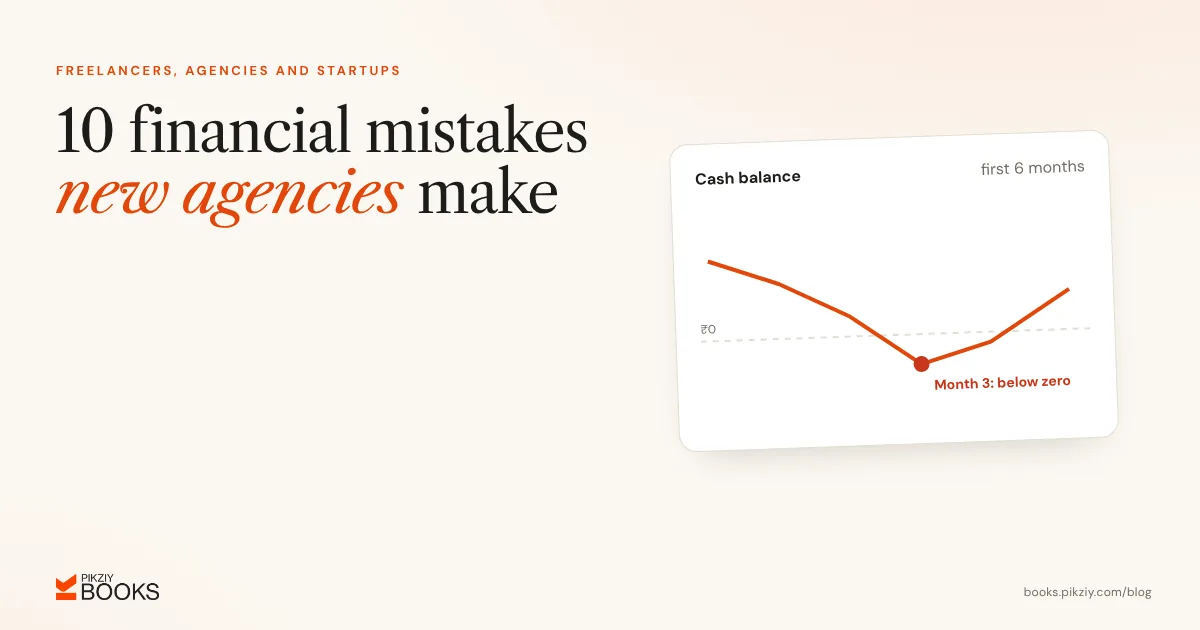
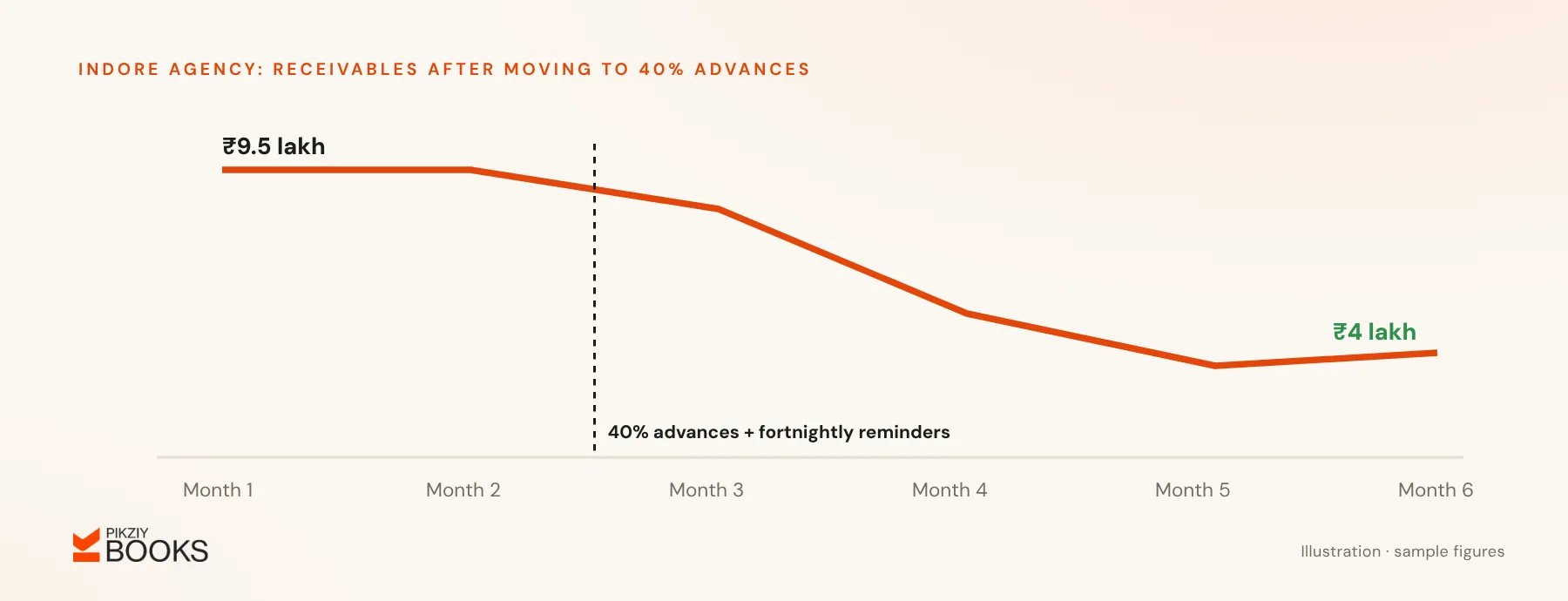
A three-person agency in Indore bills ₹6,00,000 a month but has ₹9,50,000 in receivables, mostly 30 to 60 days old. Monthly fixed costs are ₹4,20,000. On paper it earns ₹1,80,000 a month. In practice it borrows to pay salaries in the third month. Moving to 40% advances and fortnightly reminders cut receivables to ₹4,00,000 within a quarter.
A first-year finance routine
| How often | What to do |
|---|---|
| Weekly | Review receivables and send reminders |
| Monthly | Profit and loss, cash position, GST and TDS compliance |
| Quarterly | Pricing review and client profitability |
For the monthly GST side, see GST mistakes that disrupt your accounts.
Frequently asked questions
How much cash reserve should a new agency keep?
When should an agency hire an accountant?
Is it better to take retainers or projects in year one?
Why does a profitable agency run out of cash?
Next step
Pick the two mistakes on this list that sound most familiar and fix them this month. PikZiy Books shows your receivables, monthly profit and GST position in one place, so the numbers are there when you need them.